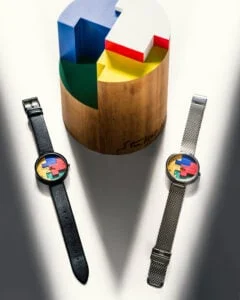
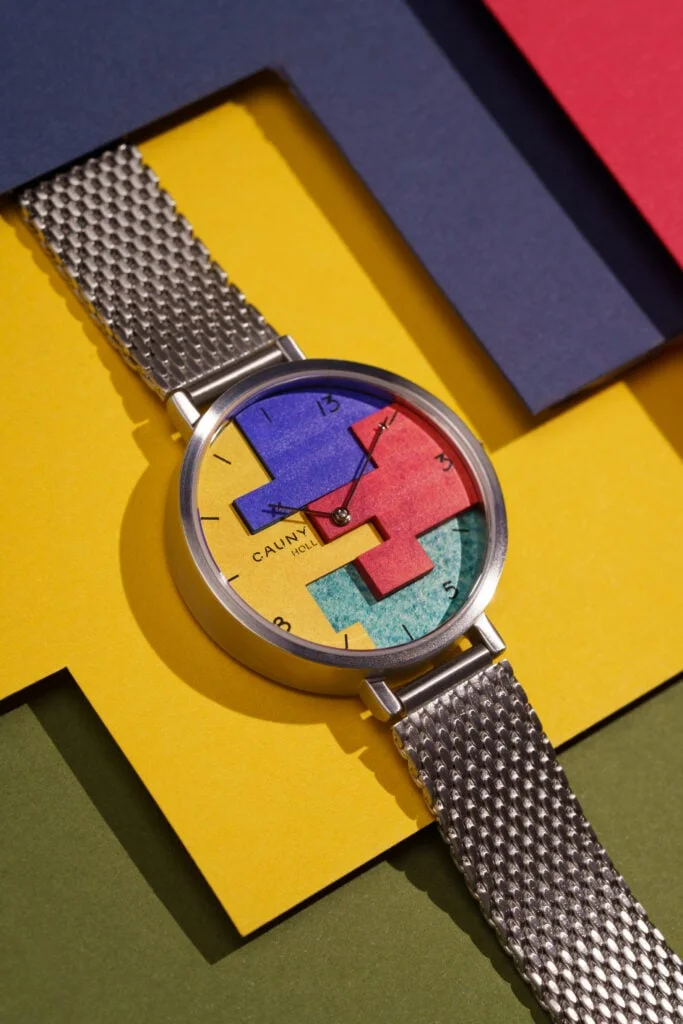
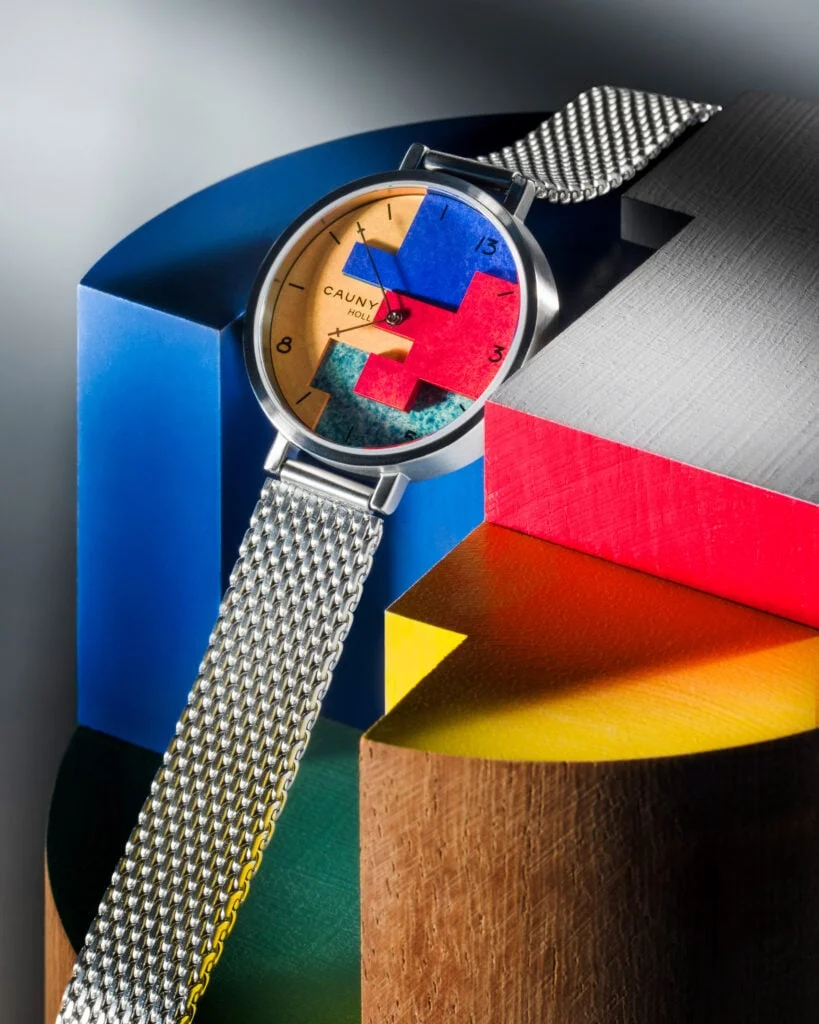
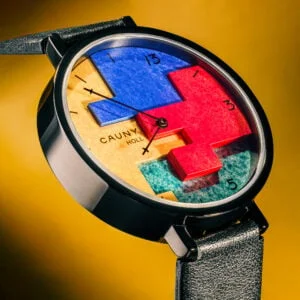
Designed with Álvaro Siza’s earlier Cauny watch in mind, Steven Holl’s Sculpture Watch pairs a circular case with layered, watercolour-inspired brass colour blocks.
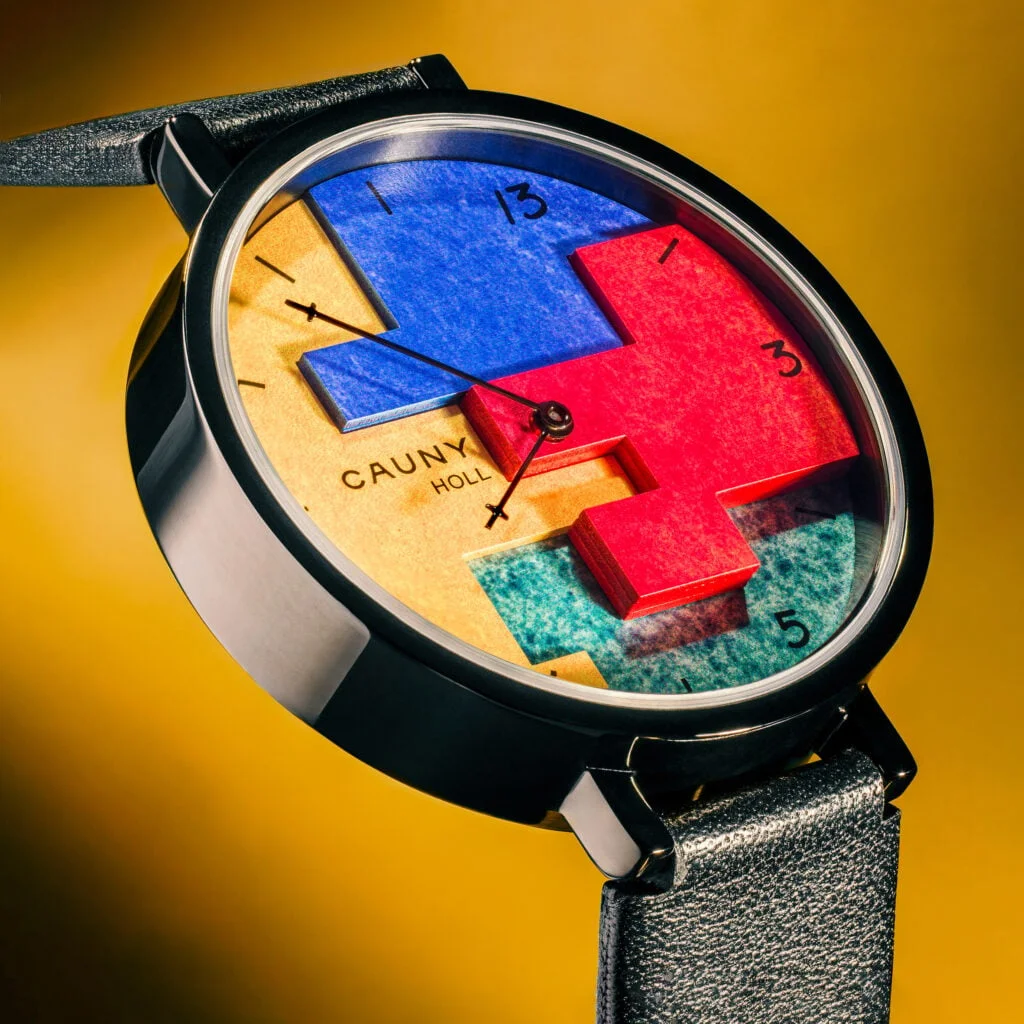
 Here's a watch that's really an architect's argument in miniature. American architect Steven Holl has designed the Sculpture Watch for Swiss brand Cauny, and the design grew out of conversations with Portuguese architect
Photographs






A compliment that became a watch
Holl doesn't present the Sculpture Watch as a famous name lending its signature to a dial. He calls it a dialogue with Alvaro Siza, and the whole thing traces back to one remark.
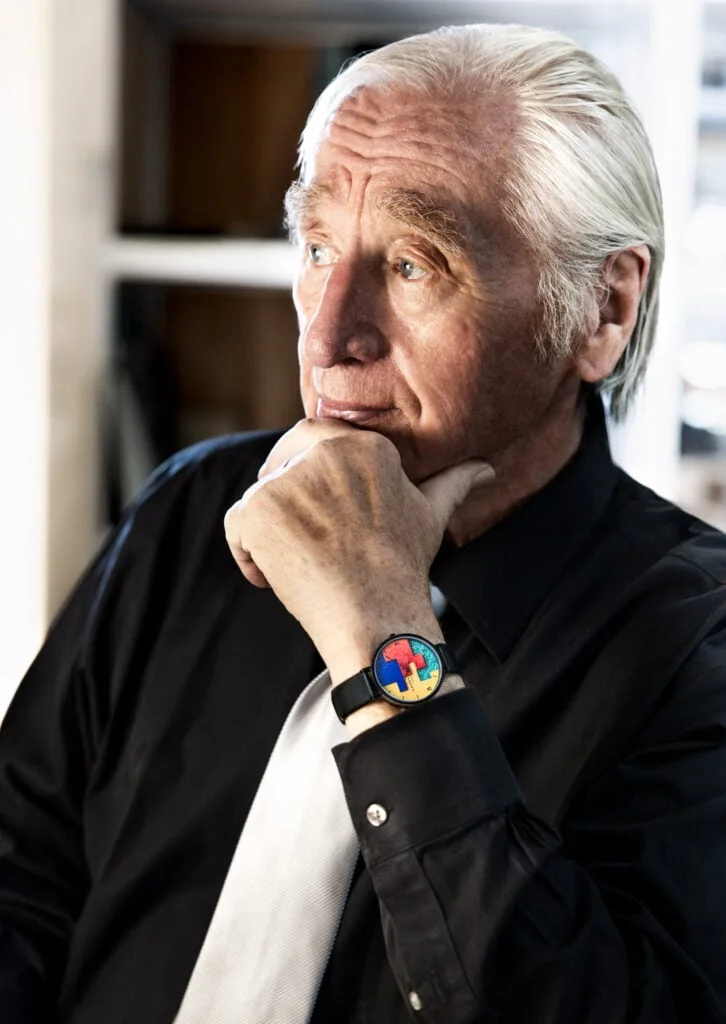
"On July 25, 2018, I gave a summer lecture at the Porto Academy," Holl recalled. "Siza came to my talk and came up to me after and said 'Steven, you use colour like Matisse, I must try in my next project'."
"Siza is the greatest living architect," he went on. "I will never forget that afternoon. This watch is an homage to Alvaro Siza."
Watercolour, brass and a three-dimensional dial
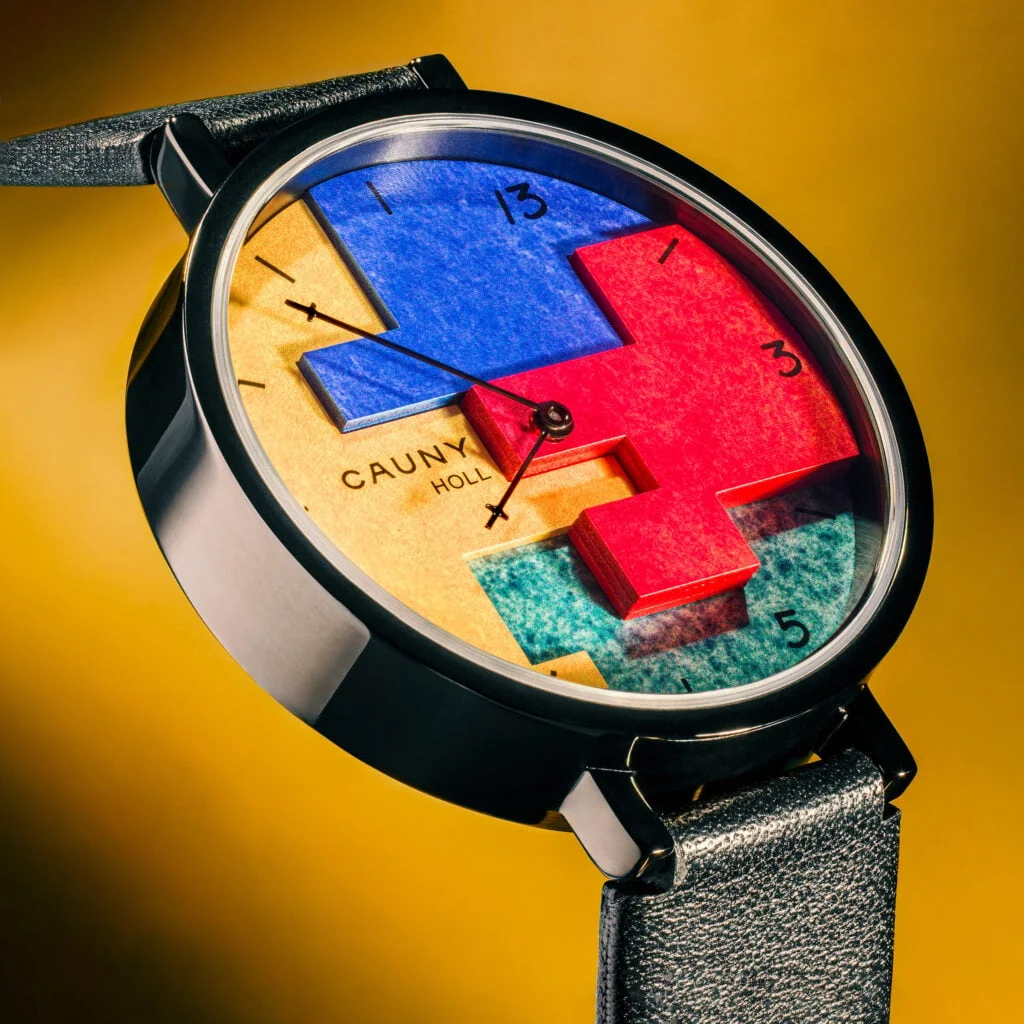
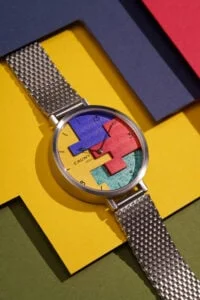
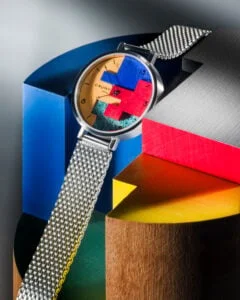
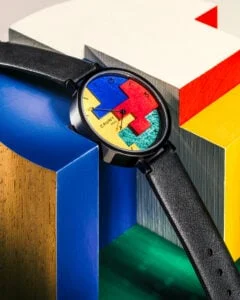
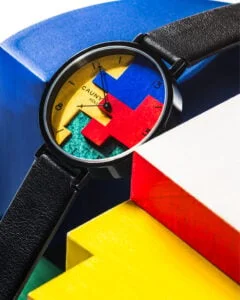
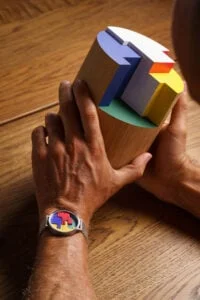
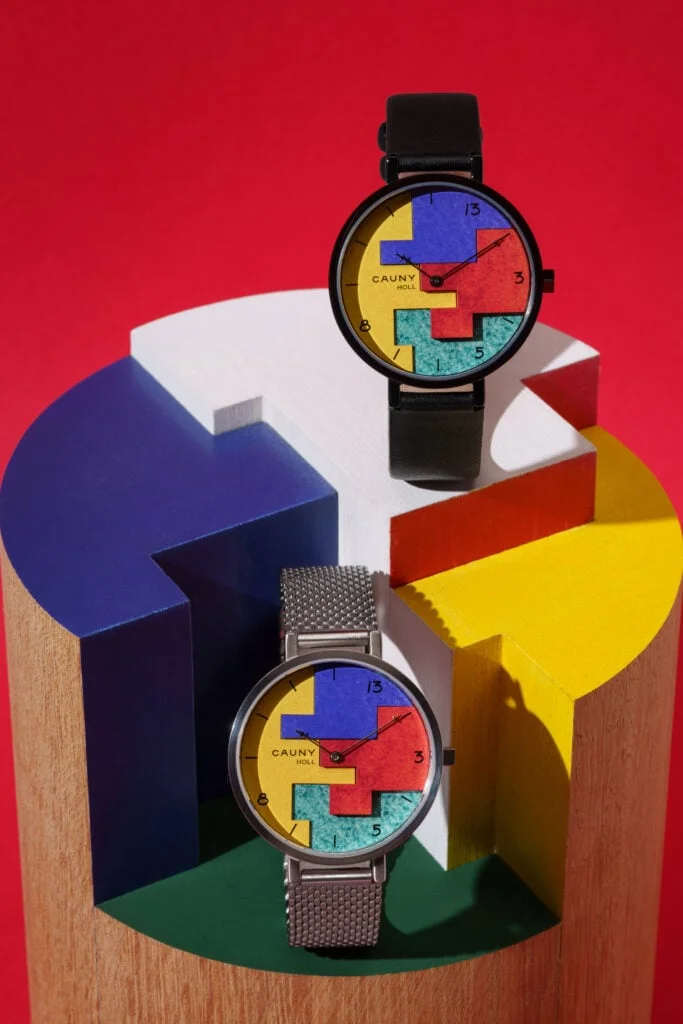
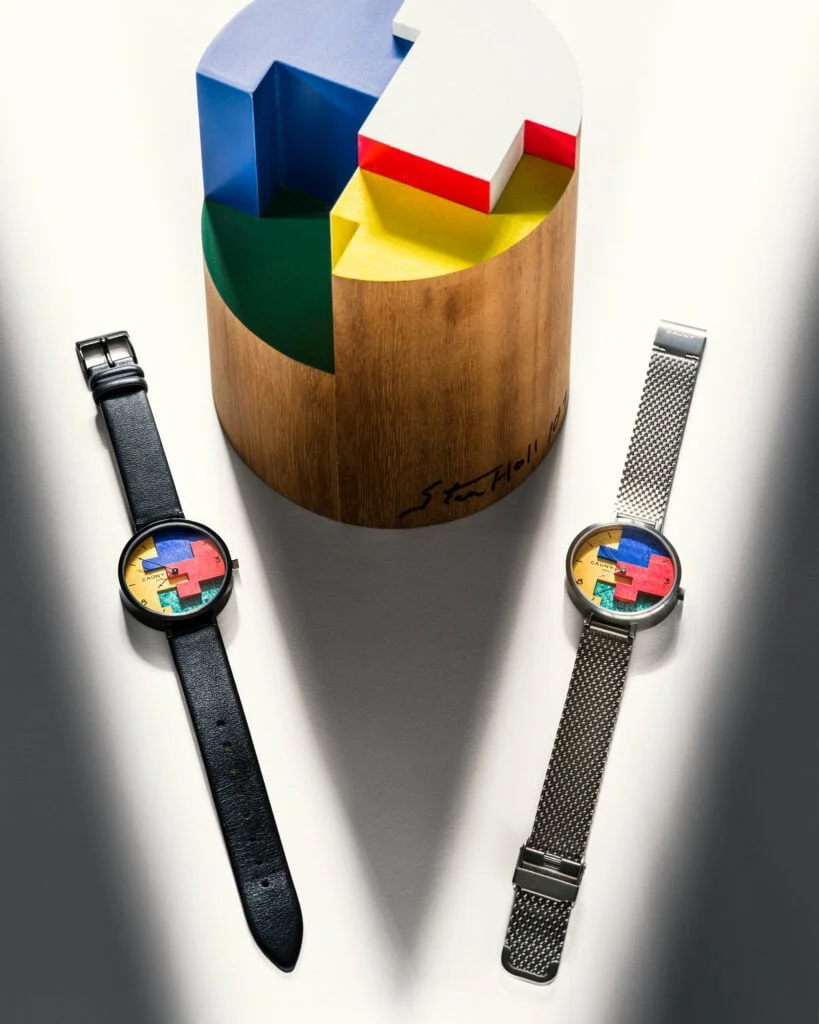
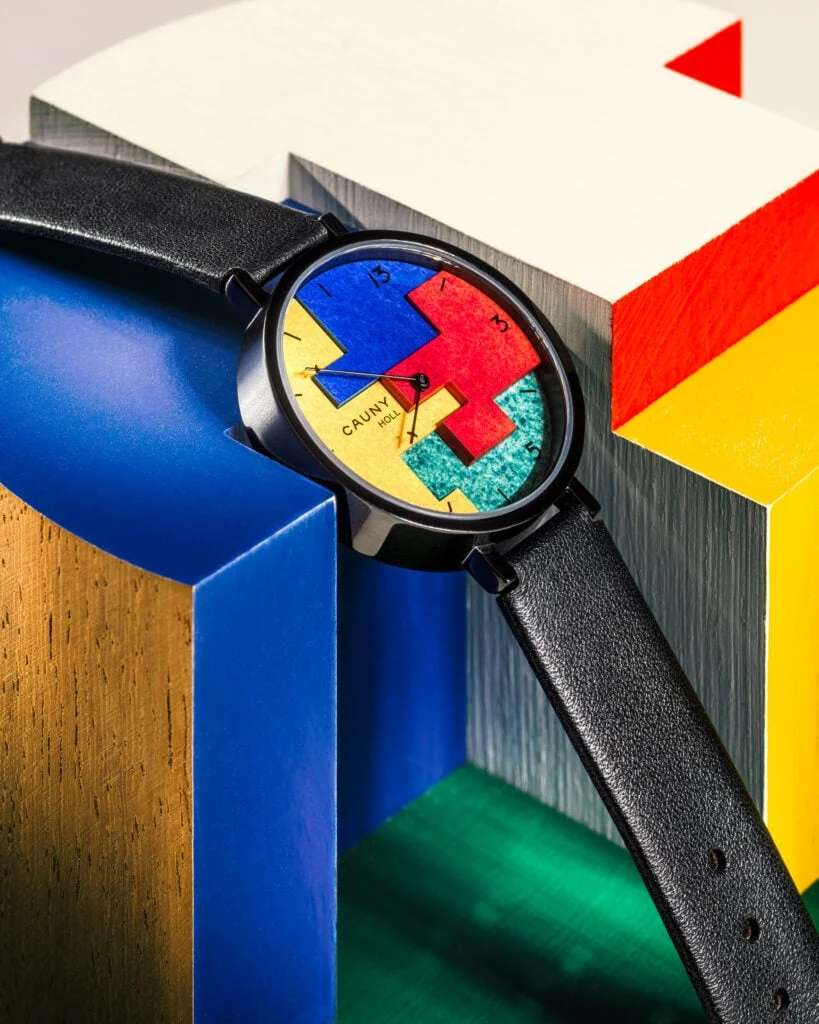
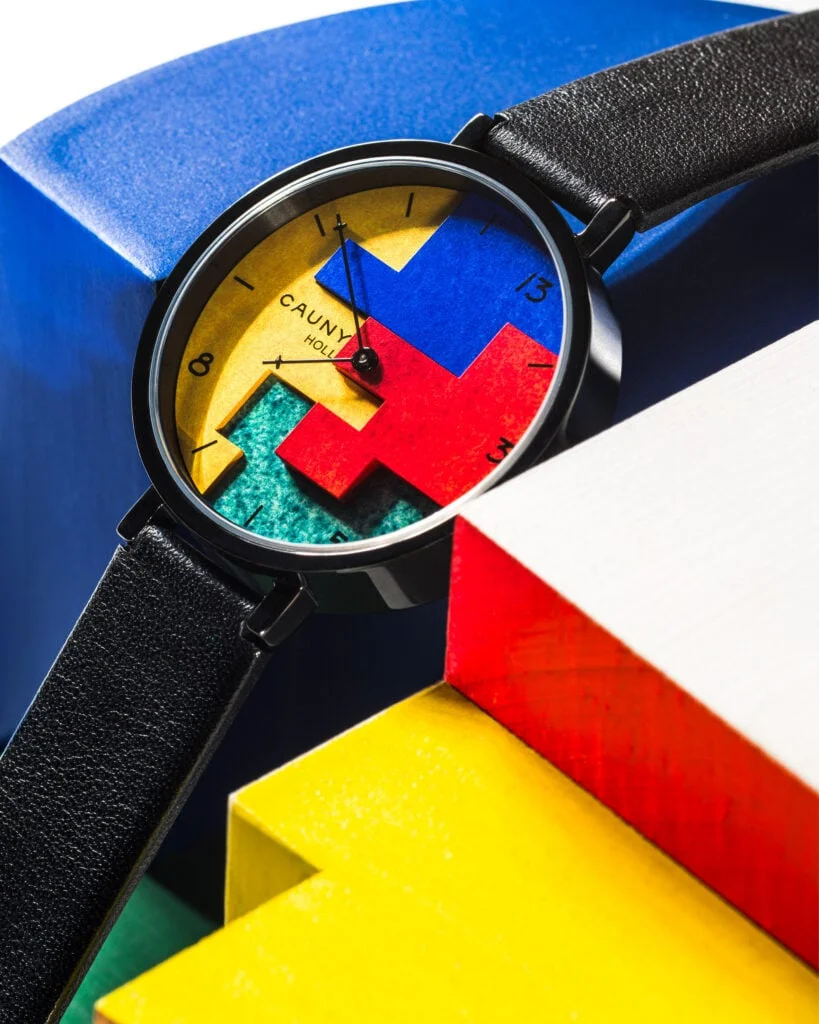
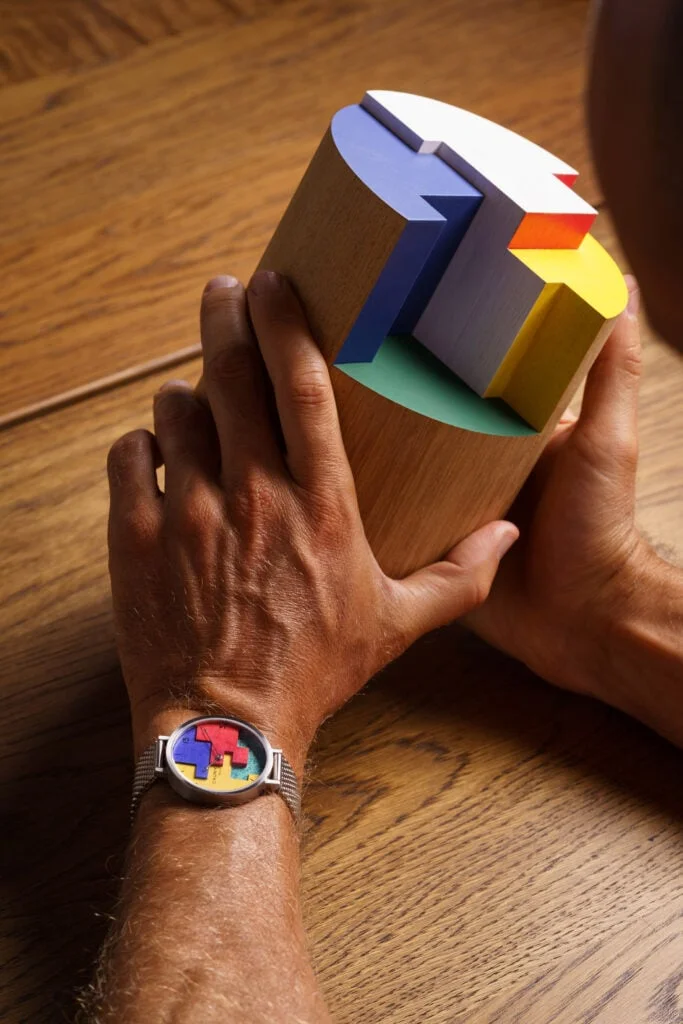
The dial is the most literal part of the design. Red, green, yellow and blue colour blocks rise off the face, stacked on top of one another, so the watch reads more like a small relief sculpture than a flat painted surface.
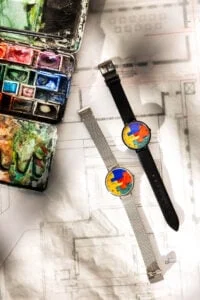
That's deliberate. The dial translates Holl's watercolour paintings, the same works Siza complimented. It's a useful detail: Holl starts most of his architecture projects with a small watercolour sketch, so the watch is effectively his design process turned into an object.
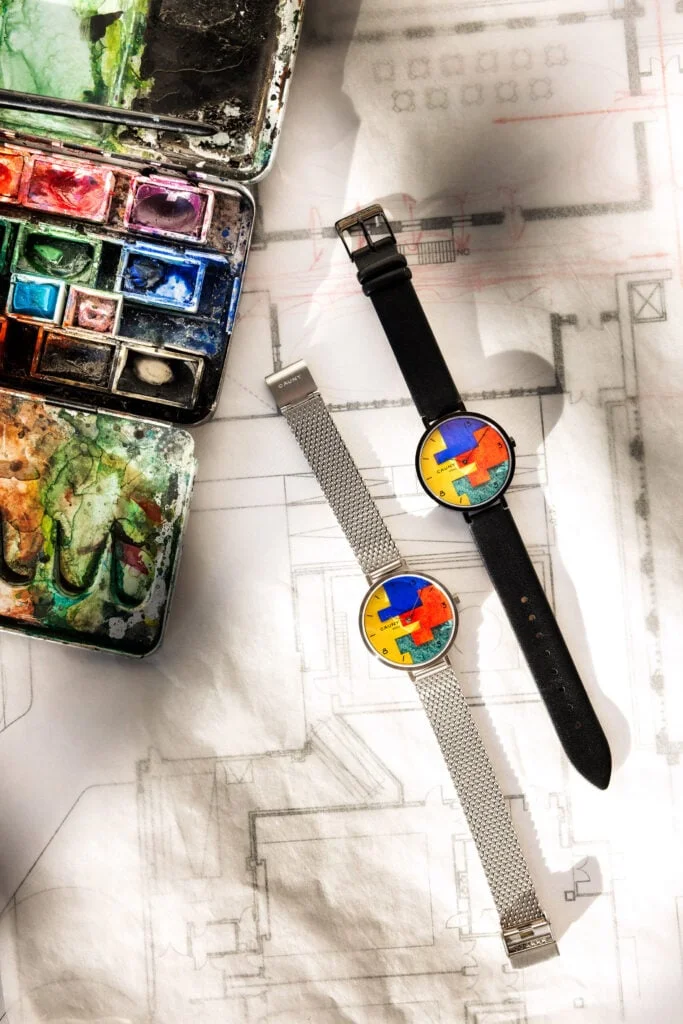
"Watercolor painting, integral to my design process for architecture, inspires this timepiece," said Holl.
The material choice is practical. "The colour volumes on the dial are made of brass; well-tested in watchmaking and best to allow Cauny to reproduce the watercolours."
Brass is an old, reliable choice in watchmaking, and that's the point. It gives the maker a stable base for reproducing something as soft and unpredictable as a watercolour wash.
Colour as a design argument
Holl's view of colour goes well beyond decoration. "My approach to colour is conceptual," he said. "I try to engage colour in the idea driving the design, like the 'projected colour' from unseen surfaces in the DE Shaw trading floor, or the complimentary colours in the 'seven bottles of light' in our Chapel of St. Ignatius, which is analogous to the Jesuit spiritual exercises."
Read that way, colour isn't a finish applied at the end. It's the thinking that drives the form, and the watch is meant to carry that logic onto the wrist.
Colour and the passage of time
A watch is an obvious place to make a claim about time, and Holl does. Colour, he argues, is how each person experiences it.
"Time is marked in a personal way, with each moment its own polychrome experience," he said. "Colour turns time's passage into both a visual and temporal experience. The fragility and variation of colour remind us that time is a human experience of duration."
It's a more interesting pitch than the usual talk about craftsmanship. Holl isn't selling precision here so much as a reminder that a moment looks different depending on who's looking at it, which is a slightly awkward message for a timekeeping object, and that's probably why it works.
Where the series goes next
The Sculpture Watch is the fifth piece in Cauny's The Architects of Time Series. Siza designed the first timepiece, and Rafael Moneo, Eduardo Souto Moura and Tadao Ando have followed with watches of their own.
Five pieces in, the series is starting to look less like a set of celebrity collaborations and more like a survey of how architects think about time. Holl's contribution is the most explicitly theoretical so far, and that's worth watching if you're following how architects are moving into object design. The question is whether the next architect treats the watch as a sketch, a sculpture or a manifesto.

Discussion
Sign in to join the discussion.