Pioneer Works in Brooklyn uses seating, rest and sensory access to reshape how visitors experience contemporary art.
A place to experience art while sitting
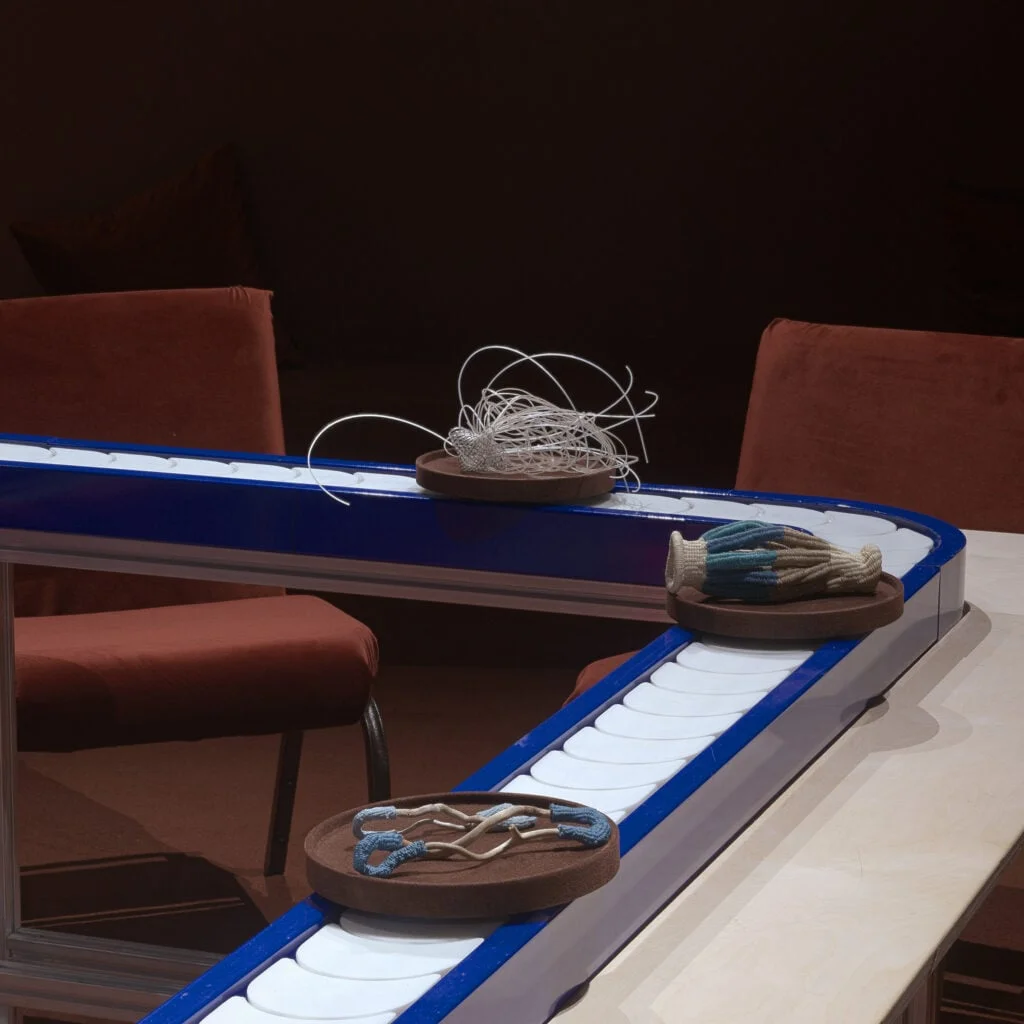
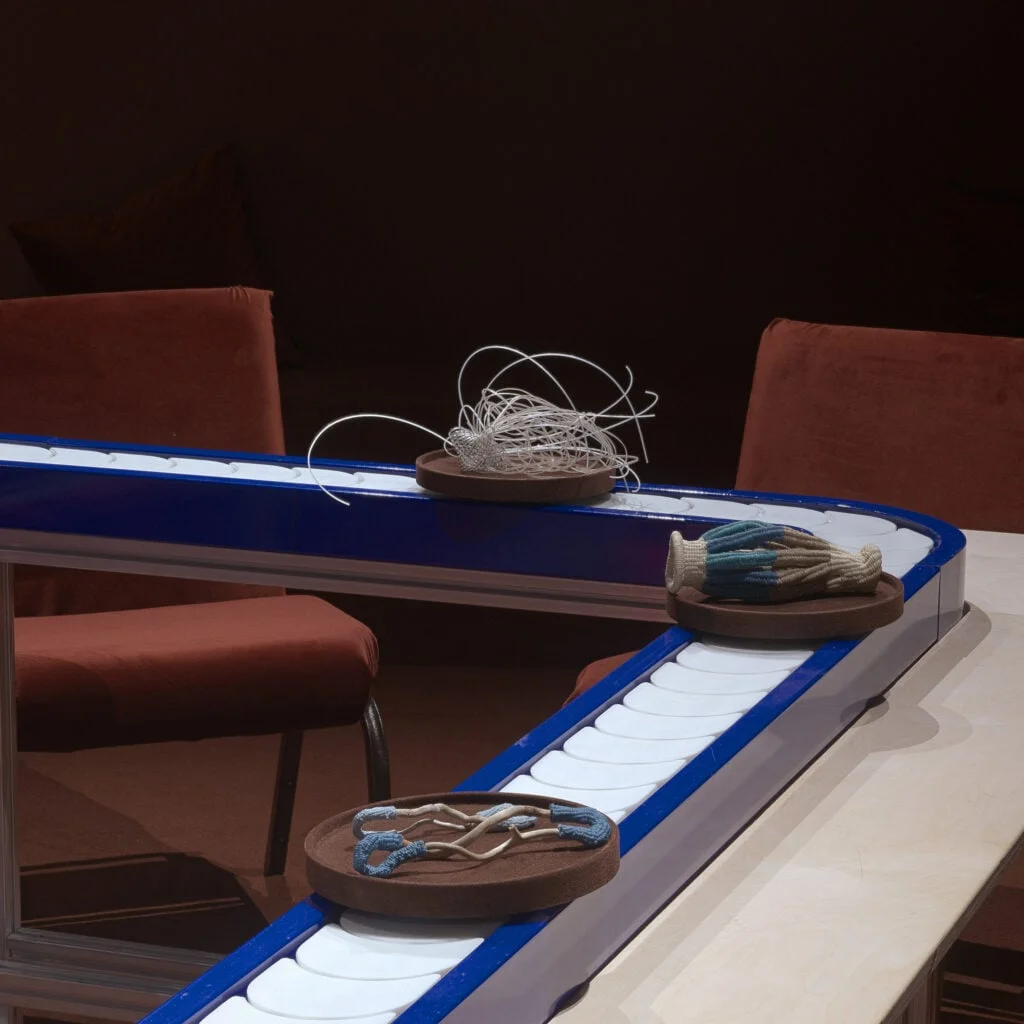
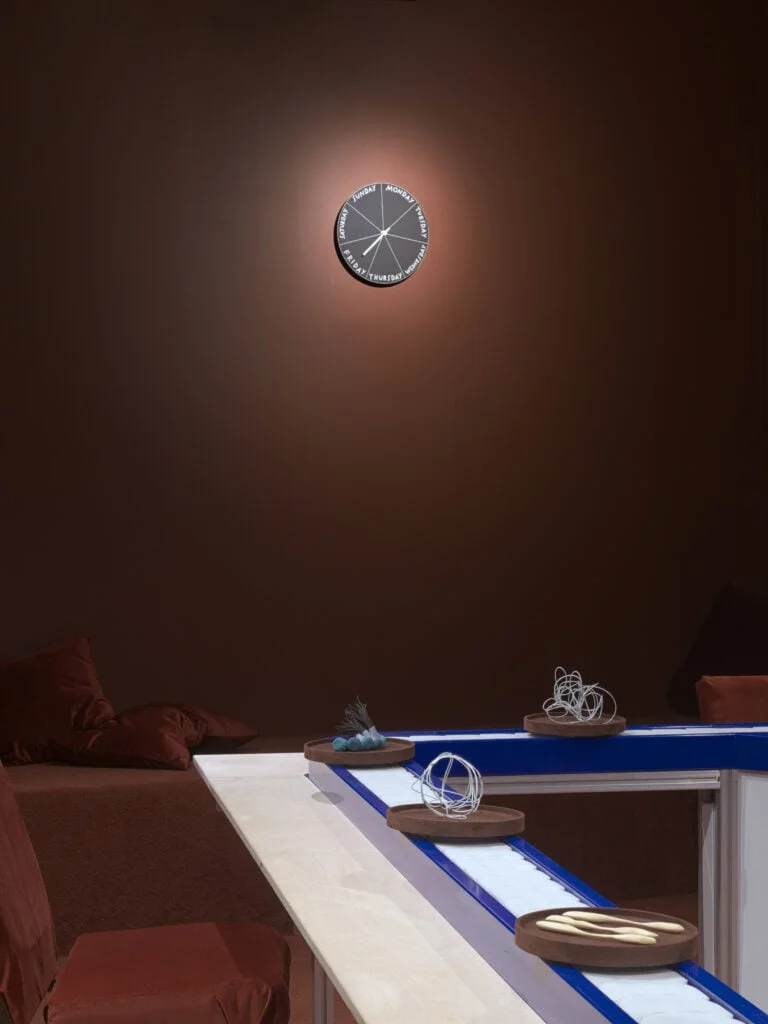
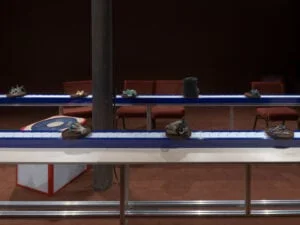
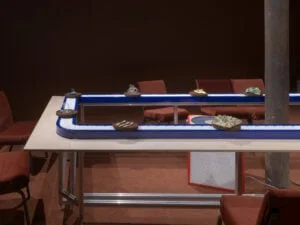
The most consequential feature of Finnegan Shannon’s installation at Brooklyn arts centre Pioneer Works is its invitation to stay seated. The New York City-based artist built a 12-foot, closed-loop conveyor belt to carry artworks, archival material and portable DVD players past visitors in chairs. It turns rest into part of the exhibition’s design, a pointed response to how rarely galleries make it easy to sit while looking. The arrangement also changes the usual relationship between visitor and object: instead of walking from one display to another, people can remain in place as material moves through their field of view.
Shannon calls the work There’s No Me Without You. They described it as a long-held vision for an exhibition space that would meet their access needs. The mechanism borrows from restaurant and retail display systems, including the conveyor belts used to serve food in sushi restaurants. Around it, the upper-floor room is softened with rich fabrics and perimeter benches. Those details matter because access here is built into the room’s use, rather than presented as a separate accommodation visitors must seek out.
“My conveyor belt, technically a retail and restaurant-style display system, is a tool for me to be in less pain when I’m experiencing art,” said Shannon, who was diagnosed with cerebral palsy at birth. “I notice I am a much more patient and curious visitor when I’m sitting down.” That’s more than a comfort measure: the installation makes a case that physical ease can change how long, and how attentively, someone engages with art. It also asks a practical question of galleries: what might visitors notice if the room didn’t make standing and moving the default conditions for looking?
Access as shared infrastructure
The title points to interdependence, a theme Shannon extends beyond the artist and audience. They imagine exhibition spaces offering “a bunch of varied and deluxe options for sitting and lying down,” and argue that such provisions remain “quite basic and sparse.” The gap is plain: visitors’ needs are varied, but the places showing art often provide few ways to meet them. A bench at the edge of a room may help some people, but a single standard option can’t answer every visitor’s needs or make rest feel welcome throughout a visit.
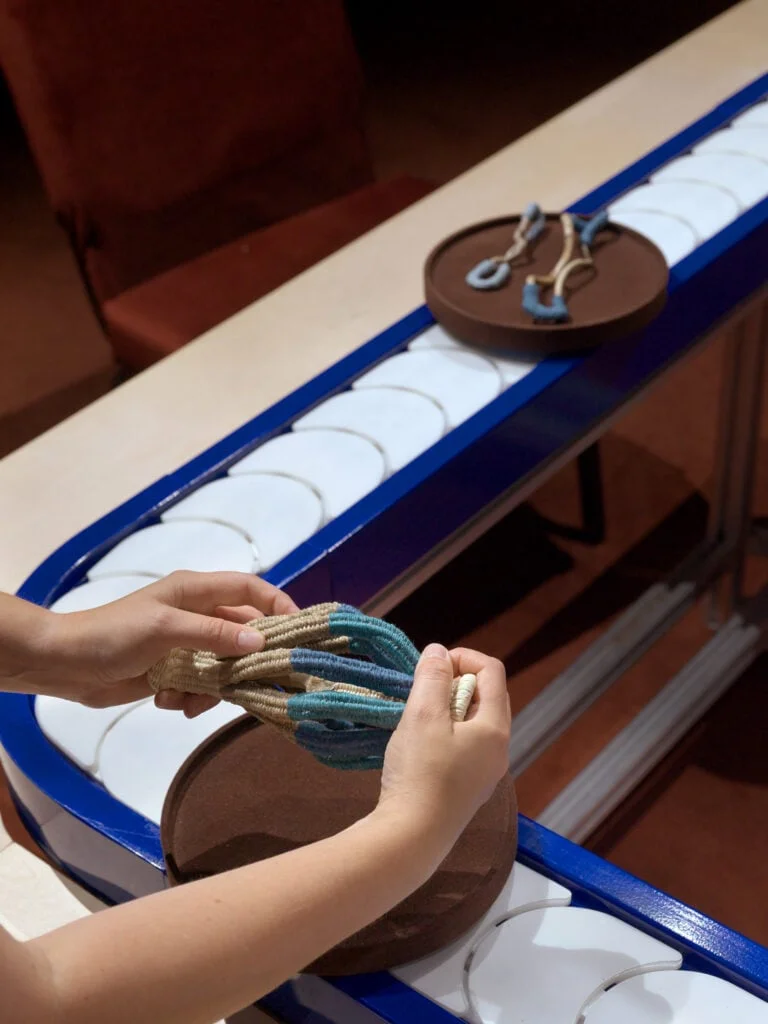
The installation also hosts new commissions by three disabled artists: Joselia Rebekah Hughes, Ariana Martinez and Alex Dolores Salerno. Across three consecutive exhibitions, visitors are invited to encounter the work through touch, sight and sound. Brightly coloured air filters sit within the conveyor belt, and visitors are encouraged to wear masks. The mix of formats broadens the terms of attention: a visit needn’t depend on looking at objects from a standing position, or on engaging through sight alone.
Shannon uses the exhibition to make collaboration visible. “We know that on some fundamental level, no solo exhibition is truly a solo endeavor,” they said, pointing to the work of art handlers, facilities staff, curators, registrars, accountants and assistants. The dependencies continue outside the institution, they added, through paid and unpaid care work, friendships, family and connections both nearby and around the world. That’s a useful correction to the familiar image of the artist working alone: an exhibition depends on many kinds of labour, even when most of it stays out of view.
“I never want someone to come away from an exhibition with my work feeling like they’ve experienced something that is mine,” Shannon said. They hope visitors instead find paths into the broader world of disability culture. Their earlier access-focused projects include Alt Text as Poetry, made with Bojana Coklyat and focused on image description, and Do You Want Us Here or Not, a series of museum benches and cushions designed to encourage rest. The projects share a concern with the conditions that shape who can participate, and how institutions communicate that participation is expected.
That interest in accessible design has appeared in other settings too, including the Fashion Institute of Technology’s Adapt/Evolve exhibition in New York last year. Seen alongside those projects, the Pioneer Works installation reads as part of a continuing practice: using design choices to make access visible and to let visitors experience how those choices affect a room.
What the installation asks of galleries
Here’s the thing: a conveyor belt is an unusually visible answer to a routine problem. Its scale makes the visitor’s comfort part of the exhibition’s central structure, rather than an afterthought tucked against a wall. This is more significant than it looks. The work suggests that access can shape the pace and form of an encounter with art, while also making the labour and relationships behind exhibitions harder to ignore.
That said, one installation can’t establish what every visitor needs, and the article offers no account of how different audiences respond to the space. The stronger point is the question it leaves with institutions: whether seating, varied ways to engage, and room to rest are treated as basic parts of exhibition planning. If you’re working in this space, the distinction is concrete. Access affects not only who can enter a gallery, but also how long they can stay and what they can take in. And this is the part most people overlook: a visitor’s ability to pause can be as consequential to an exhibition experience as the objects on display. A different pace.
There’s No Me Without You is on view at Pioneer Works in Brooklyn from 12 September to 20 December.
Discussion
Sign in to join the discussion.