Studio Aslak Siimes and CurifyLabs’ Aurum system automates parts of custom medicine production, with use reported across Europe, North America and 30 US states.
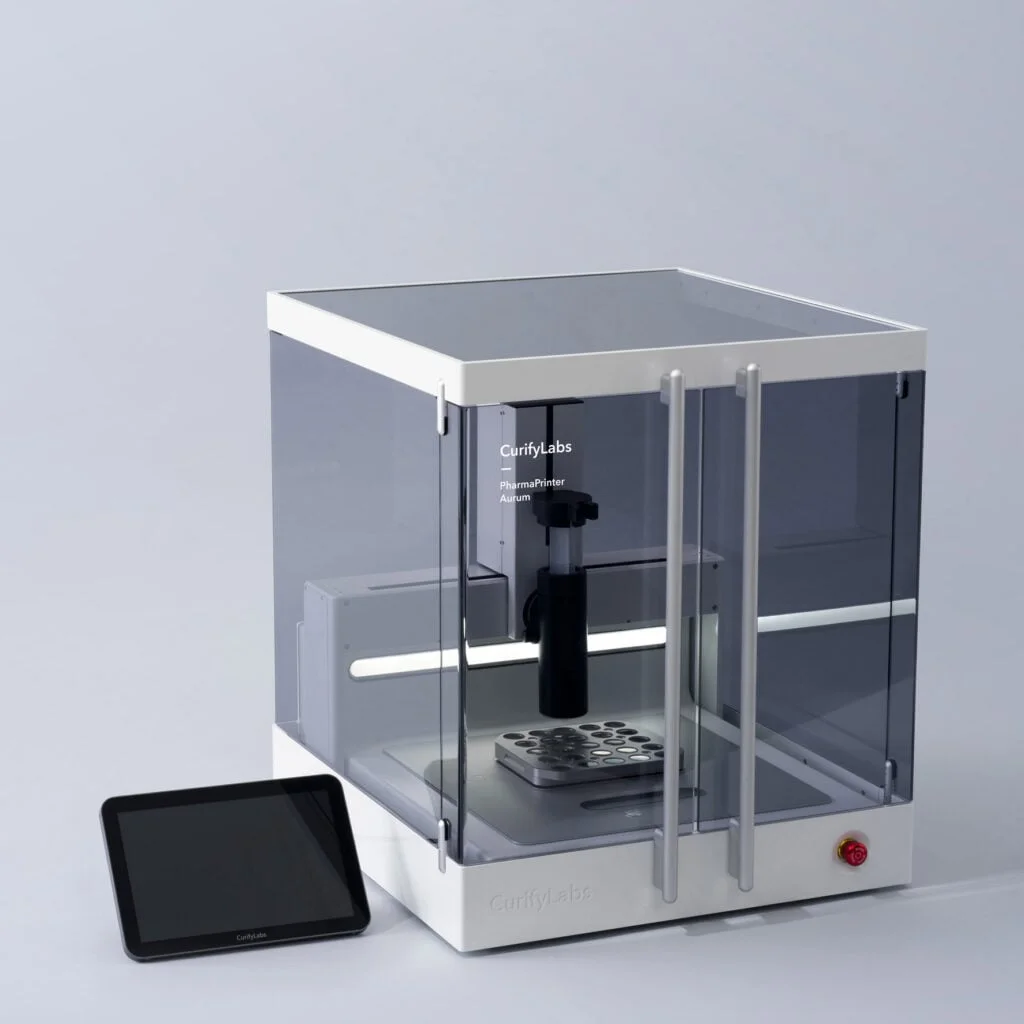
Custom medicine production is the focus of PharmaPrinter Aurum, a system developed by Finnish health tech company CurifyLabs with industrial design firm Studio Aslak Siimes. The machine automates parts of pharmacy compounding, aiming to improve dosage consistency and reduce opportunities for human error. Its design addresses a practical gap in medicine production: some patients need doses or formats that aren’t supplied as standard mass-produced products. Automation may make those preparations more repeatable, though it doesn’t remove the pharmacist’s role in deciding what to make.
Studio founder Aslak Siimes says nearly 30 per cent of medication requires personalisation rather than mass production. Compounding pharmacists typically prepare these medicines by combining ingredients with traditional tools such as a pestle and mortar. Aurum introduces automated dispensing into that workflow while keeping pharmacists responsible for selecting the prescription’s formulation. That division of work matters: the machine handles controlled movements and measured output, while professional judgment remains part of the process.
From prescription to prepared dose
After a prescription arrives, a compounding pharmacist selects its recipe, which CurifyLabs calls a blueprint. The active pharmaceutical ingredient and excipient base are weighed, mixed and loaded into a syringe. A heating jacket holds the syringe as it is fitted into the machine. This sequence leaves several preparation steps in staff hands before the automated dispensing begins, so the system’s consistency depends on both the equipment and the setup that precedes it.
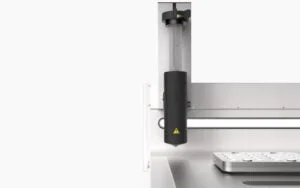
A patented attachment called the gripper connects to the syringe plunger. The pharmacist secures it by squeezing a lever, positioning the gripper against the plunger and releasing the lever; the attachment then controls how the medicine is dispensed. It’s a small mechanical interface, but it links a familiar syringe to the machine’s dosing process. Any account of the automation needs to include this handoff, since staff still load and secure the components.
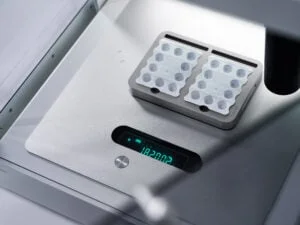
Studio Aslak Siimes also designed the medication blisters and a holder that places them on a scale. The scale checks weight during production, while the system dispenses the prescribed quantity into each blister. Staff then remove, seal and label the finished doses for distribution. Weight checks can provide a useful process signal, but the source doesn’t establish what other quality controls are used or how the system responds when a check falls outside its expected range.
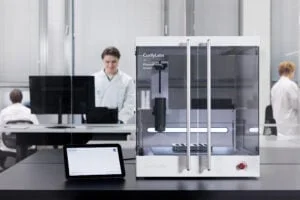
One system, several dosage forms
Interchangeable modules let pharmacists produce tablets, films, suppositories and troches using the same system. Supporting several forms gives a pharmacy more than one way to prepare a prescription within the same equipment setup, while the choice of formulation remains with the pharmacist. The range is notable, though the article doesn’t specify production capacity, preparation time or how frequently each module is used.
Aurum forms part of a wider CurifyLabs product ecosystem; Studio Aslak Siimes has worked with the company for two years. Siimes describes Aurum as the world’s only fully working semi-automated compounding ecosystem. That is a broad claim from the studio founder, and the information provided doesn’t set out how the category is defined or how competing systems were assessed. The distinction between “semi-automated” and fully automated is also central: the workflow includes machine-controlled dispensing, alongside human preparation and finishing.
The product is already being used by compounding pharmacies and hospitals in Europe and North America, and Siimes says the technology is present in 30 US states. He reports positive feedback from clients, who say the system helps them prepare medicines for patients and is easy to operate. Those accounts suggest that adoption has begun, but they’re still reported by a project partner rather than presented as an independent evaluation. What this means for you depends on whether you’re looking at the device as a design object, a production tool or evidence of wider changes in pharmacy practice.
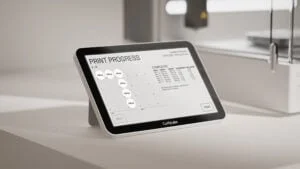
Automation’s reach—and its limits
The system’s market presence points to a practical role for automation in pharmacy compounding: handling repeatable dispensing and weight checks while pharmacists determine the formulation. Its reach across hospitals and pharmacies suggests that patient-specific production is already finding a place in routine healthcare settings. This is more significant than it looks, because the case for such equipment rests less on replacing a craft process than on making parts of that process easier to repeat.
And yet, the reported footprint doesn’t answer every question about the technology’s effect on day-to-day work. The source gives no figures for output, error rates or time saved, so it’s not possible to measure those benefits from the account alone. Nor does a machine’s presence in a pharmacy establish how much of its compounding work runs through the system. The claim is promising, but its practical value will depend on how the equipment fits into preparation, checking and finishing across different workplaces.
If you're working in this space, the useful distinction is between automating a task and automating a decision. Aurum is presented as doing the former: dispensing a selected formulation in controlled quantities, with pharmacists still choosing the prescription blueprint and staff handling preparation and packaging. (And this is the part most people overlook.) A machine can standardise a repeatable step without resolving the wider questions of workflow, oversight or the suitability of a given preparation. The quiet handoffs matter.
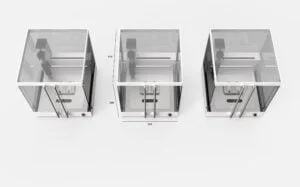
Other healthcare products recently covered on Dezeen include a wearable patch that detects heat exposure and a meter for at-home hormone level readings.
Discussion
Sign in to join the discussion.