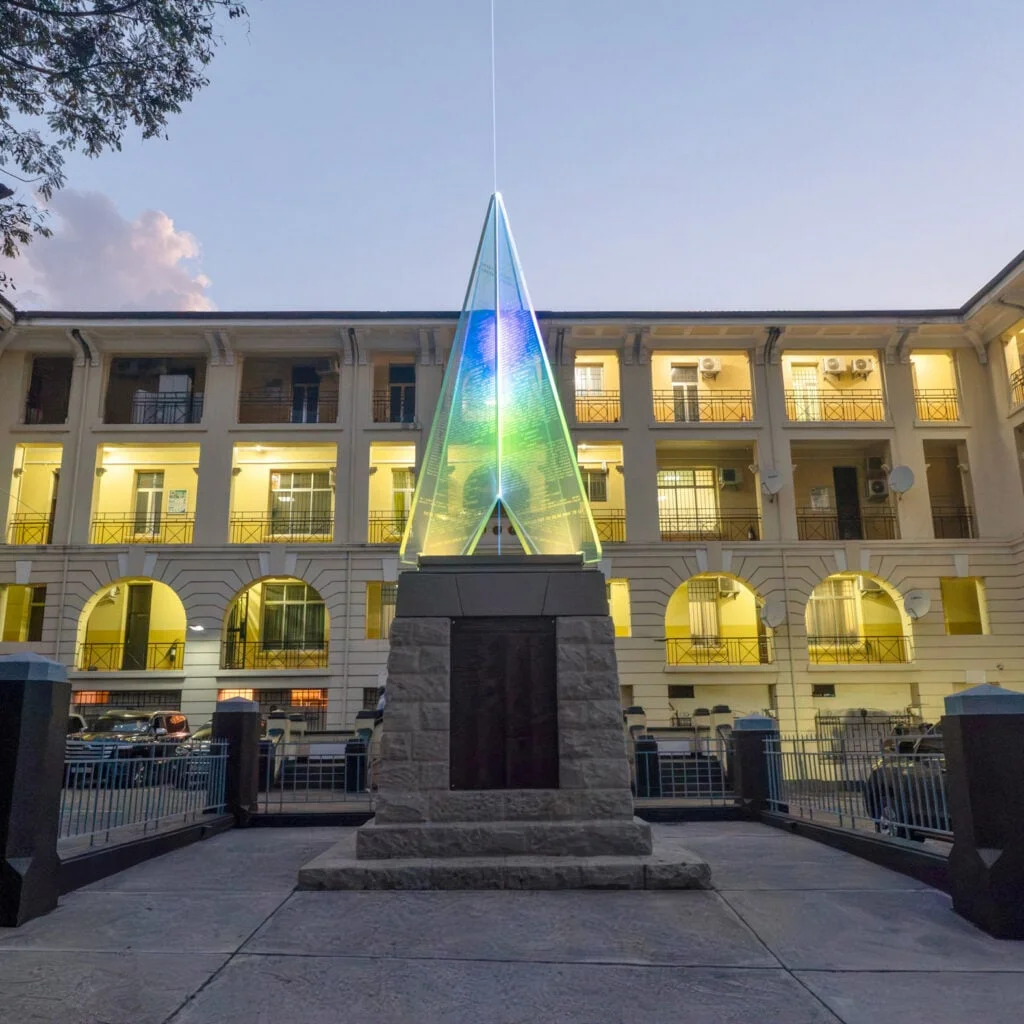
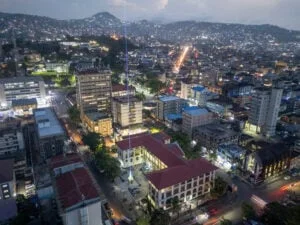
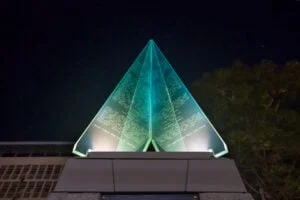
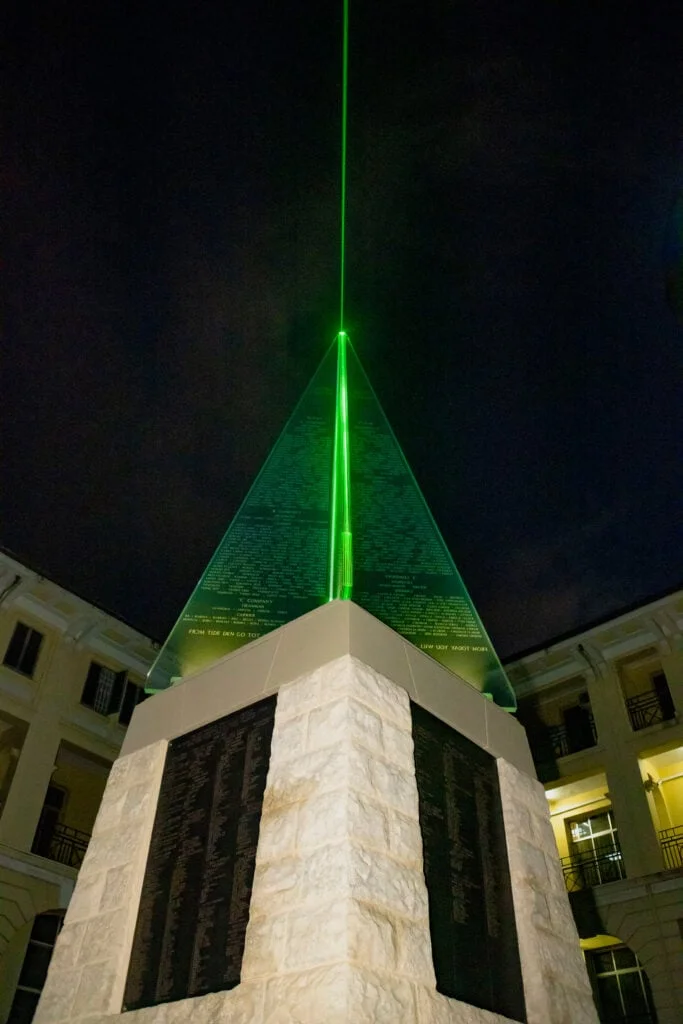
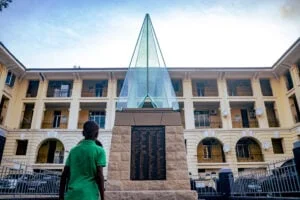
A glass pyramid etched with 946 names extends Freetown’s 1931 war memorial, recognising carriers who were omitted from its original record.
Making an omission visible
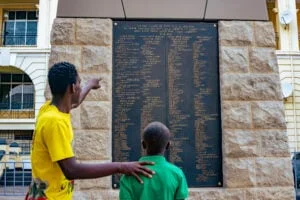
The key decision in Freetown is to make an omission visible. A new memorial by Oshinówò Studio adds the names of 946 Sierra Leone Carrier Corps members who died in the First World War to a monument that had left them unrecorded. The names turn an absence in the historical record into something visitors can encounter in the city’s public space. The correction is specific: it recognises people whose labour supported the war effort, but whose names weren’t included on the existing memorial.
Adding names to an existing monument
The Commonwealth War Graves Commission officially opened the memorial this weekend in Sierra Leone’s capital. It rises above a 1931 war memorial designed by British architect Edwin Lutyens. The original monument honoured soldiers killed in the war, but didn’t name the carriers, who had been enlisted to move supplies and materials. That distinction matters: the carriers’ work is described through its practical role, while their deaths are now marked individually.
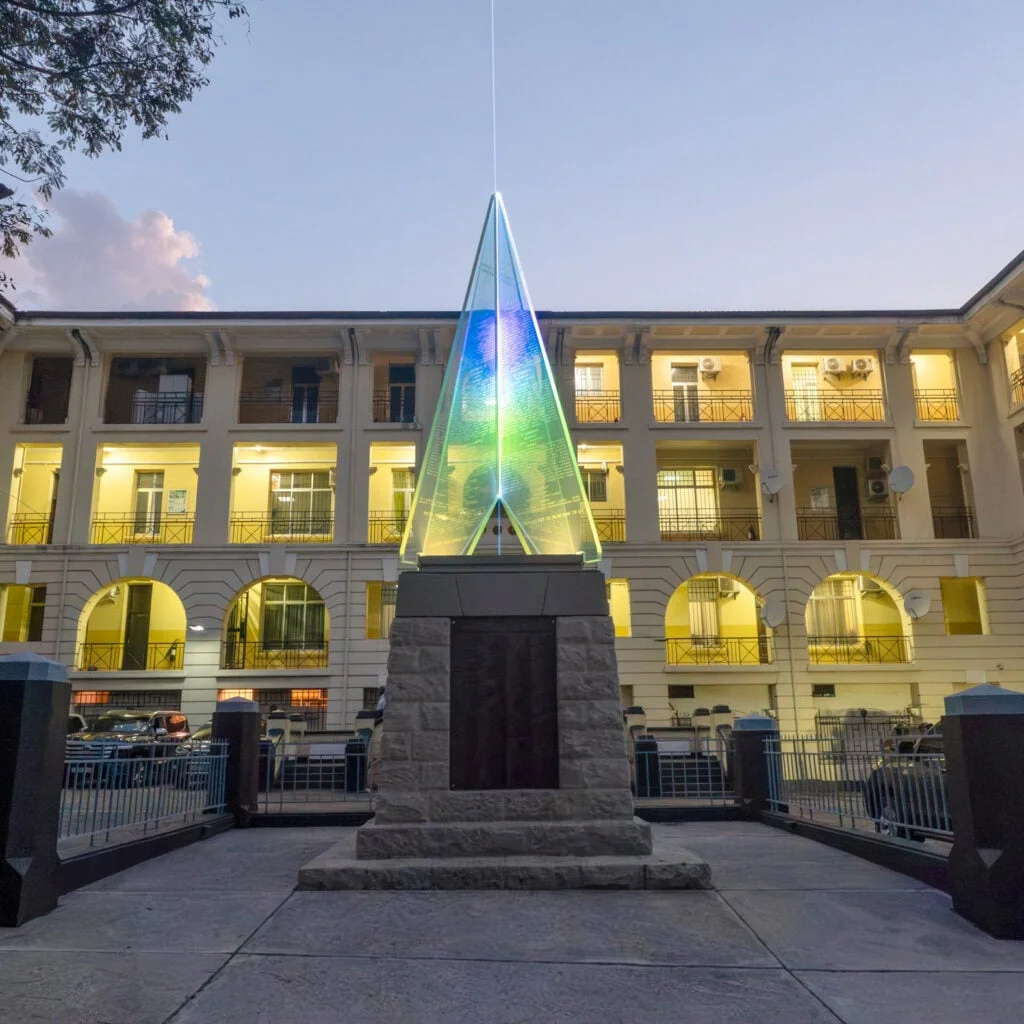
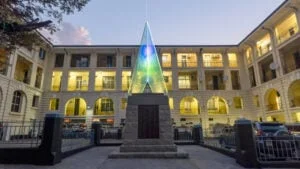
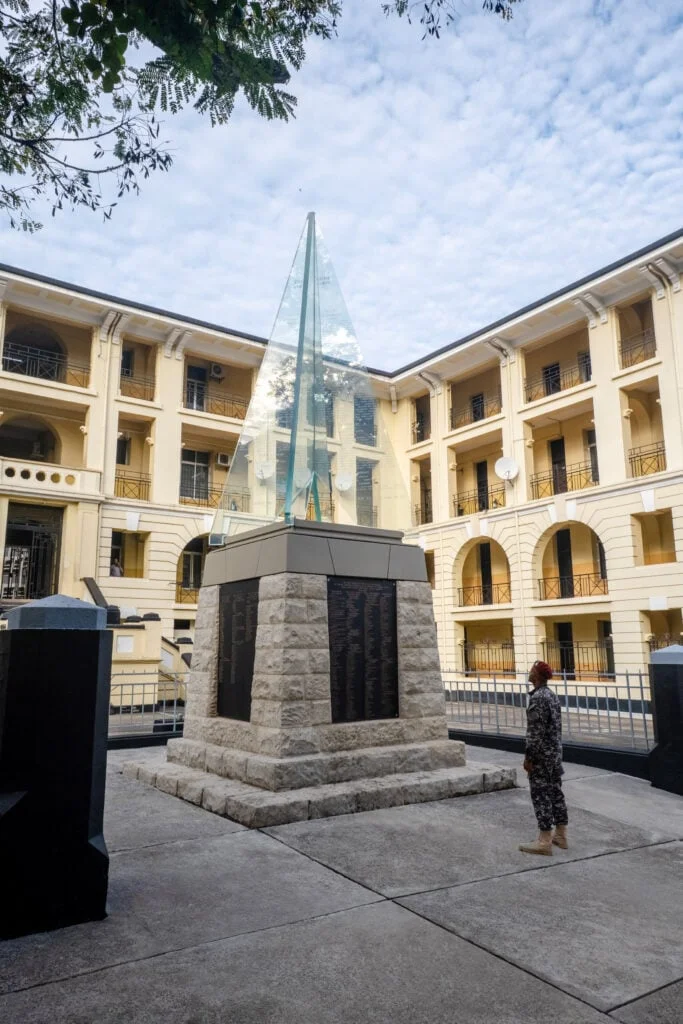
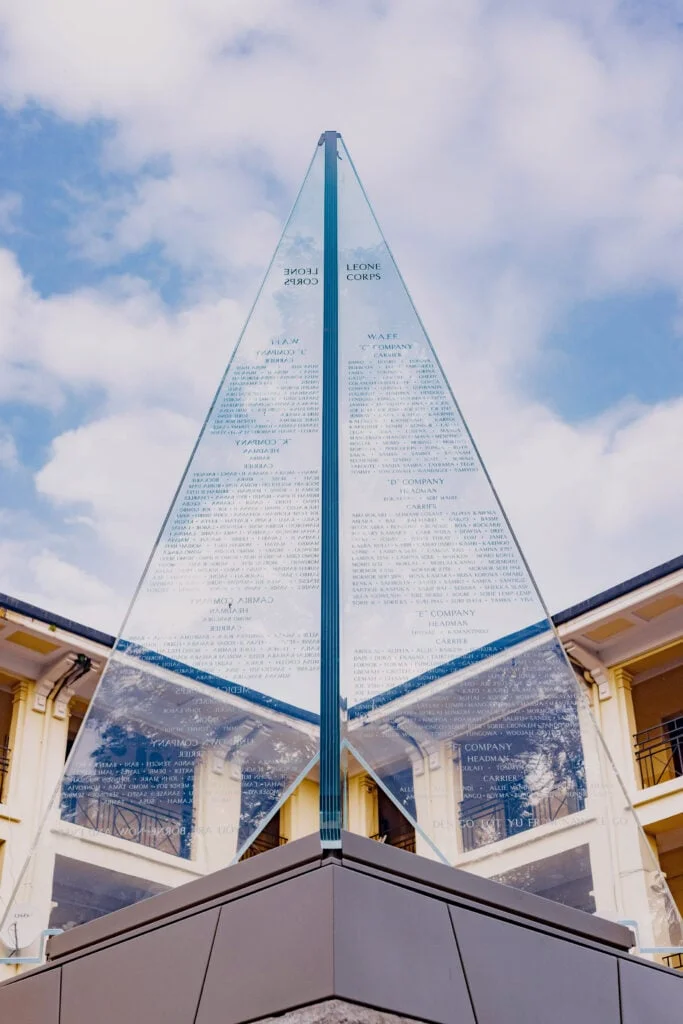
That correction is more significant than it may first appear: the new work makes the names part of the existing monument. Oshinówò Studio added a structural glass pyramid, etched with the carriers’ names, to the stone memorial. The intervention doesn’t erase the earlier structure or pretend the original monument already told a complete story. Instead, it makes the relationship between what was commemorated and what was missing part of the site’s meaning.
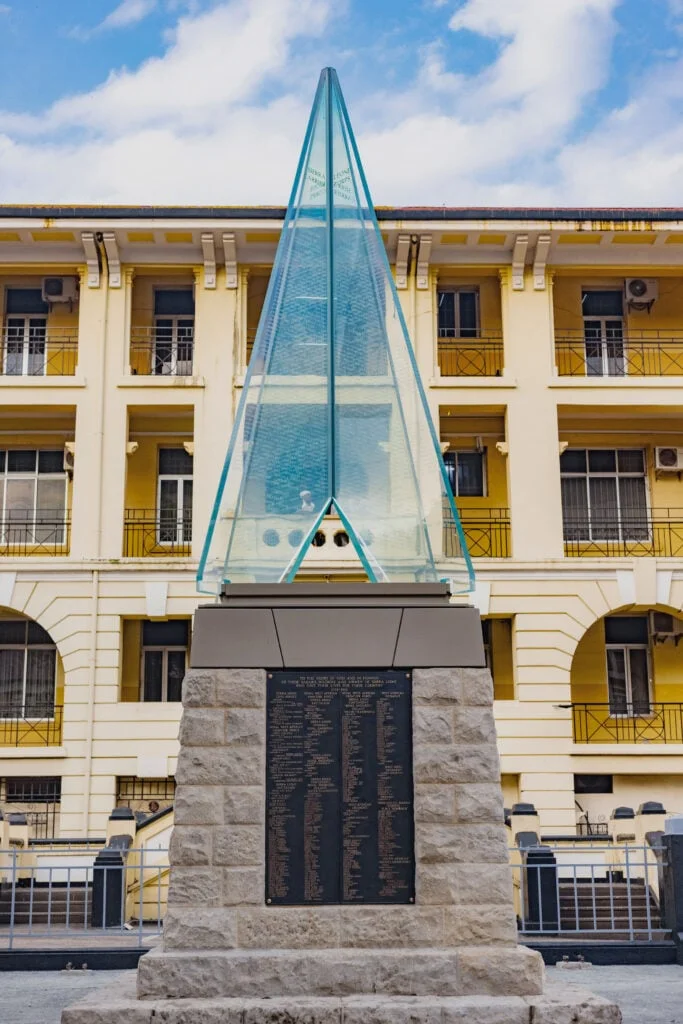
If you’re looking at how public memorials handle historical gaps, the choice to build onto Lutyens’ monument matters: the new names sit in direct relation to the memorial that omitted them. That physical connection asks visitors to read the two parts together, rather than treating recognition of the carriers as a separate story. The available description gives no further detail about the design’s symbolism or the carriers’ wartime service, so the case for the intervention rests on that visible historical connection. Here’s the thing: making the omission legible is itself a design decision.
A monument that changes who carries whom
The memorial’s most pointed idea is built into its height. Oshinówò Studio founder Tosin Oshinówò says the new glass form follows the taper of Sir Edwin Lutyens’ existing monument, extending it upward so the names of the Sierra Leone Carrier Corps sit above those of the soldiers. The extension makes the new work read as part of the older structure, while giving its added names a distinct place in the composition. A small shift in the monument’s profile carries a large interpretive burden.
That placement turns the memorial’s structure into an argument about service. Oshinówò describes it as a reversal: the carriers, who supported the soldiers, are symbolically carried by their comrades. “There is a profound irony in this act: it becomes a fitting expression of gratitude to men whose sacrifice was fundamental to shaping the world we inhabit today,” she said. The idea depends on the hierarchy implied by the two levels, and on the viewer noticing that the names now occupy the higher position. It’s a clear gesture, though its meaning is conveyed through the relation between the structures rather than through a detailed account of the carriers’ lives.
It’s more than a visual gesture. Oshinówò says the design uses material symbolism intended to speak across cultures and contexts, while raising the names—etched into glass—into greater prominence. Glass changes how names are presented: it makes them part of a translucent form, set against the stone below. The description doesn’t specify how the material’s symbolism is meant to work across different audiences, so that claim remains broad. The legibility of the names, and their position above the original memorial, are the more concrete parts of the design.
Light above a restored memorial
A laser beacon will illuminate the glass pyramid on significant remembrance days. The project team says its column of light can be seen from as far as five kilometres. The existing 1930s monument has also been fully restored, with stonemasons and bronze specialists from the Commonwealth War Graves Commission carrying out the work. The project therefore brings together two forms of attention: the new names are marked by the beacon, while the earlier structure receives physical repair. Restoration gives the altered monument a renewed material presence, rather than leaving the addition to stand alone.
The memorial joins a varied set of recent projects for remembrance, including a “serene and contemplative” memorial to Queen Elizabeth II designed by Foster + Partners and a park in Ethiopia dedicated to the 157 victims of the Ethiopian Airlines Flight 302 crash. Those projects use different forms, but each makes remembrance a matter of public space and physical design. Here, the lasting impression is the choice to make the act of carrying visible—and to place the carriers’ names above those they served.
What the intervention asks of visitors
For visitors, the memorial’s most direct effect is to change what the existing monument can be read as saying. The stone structure still marks soldiers killed in the war, but the glass addition brings the carriers’ deaths into the same frame. (And this is the part most people overlook.) The work doesn’t simply add names; it asks people to notice how a monument can preserve one account of service while leaving another out.
If you’re working in this space, the project offers a straightforward lesson in how an addition can make historical revision visible: keep the relationship to the original site clear, and let the new element show what the earlier one failed to record. That’s an argument about this memorial’s form, not a guarantee that architecture can settle the wider questions of recognition. More visible. More legible. Whether the intervention prompts further attention to the carriers’ service will depend on what visitors learn beyond the names themselves.
The project’s strength is also its limit. The memorial identifies 946 people and gives their names a prominent setting, while the available account says little about the conditions of their service or the circumstances of their deaths. That gap doesn’t diminish the act of recognition, but it defines what the design can communicate on its own. The names establish who was missing from the monument; fuller historical understanding requires more than a sculptural addition.
The post Oshinówò Studio tops Lutyens-designed war memorial with glass prism to honour Sierra Leone's Carrier Corps appeared first on Dezeen.
Discussion
Sign in to join the discussion.