London V&A Installation Highlights the Hidden Work Behind AI Data Centres
Published
Nov 09, 2026
Views
343
Playfool’s V&A installation turns server cleaning into a timed game, making the human upkeep behind AI infrastructure visible.
The Server turns a hidden cost of the AI boom into a visitor’s timed task: clean a server, and see how work gets measured. That’s more than a playful museum gimmick. It puts the people and upkeep behind digital infrastructure in the foreground.
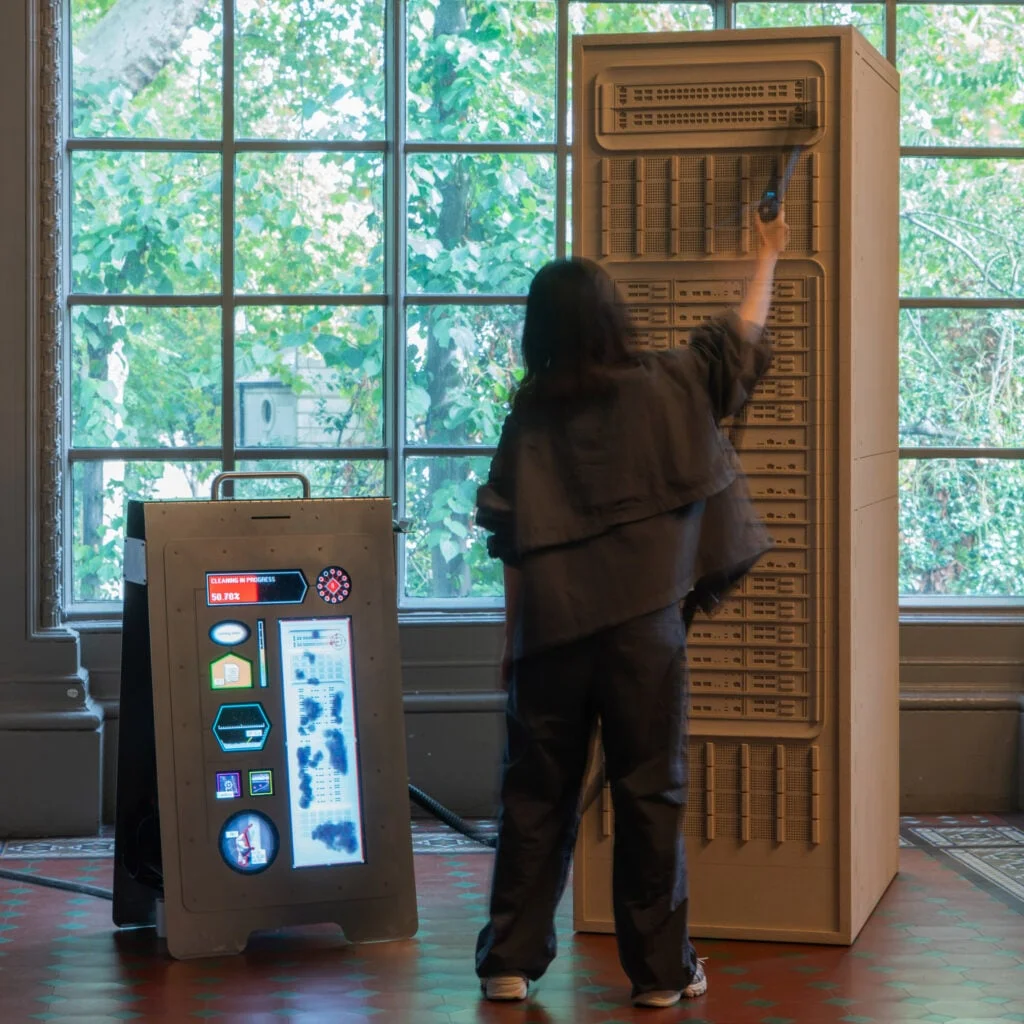
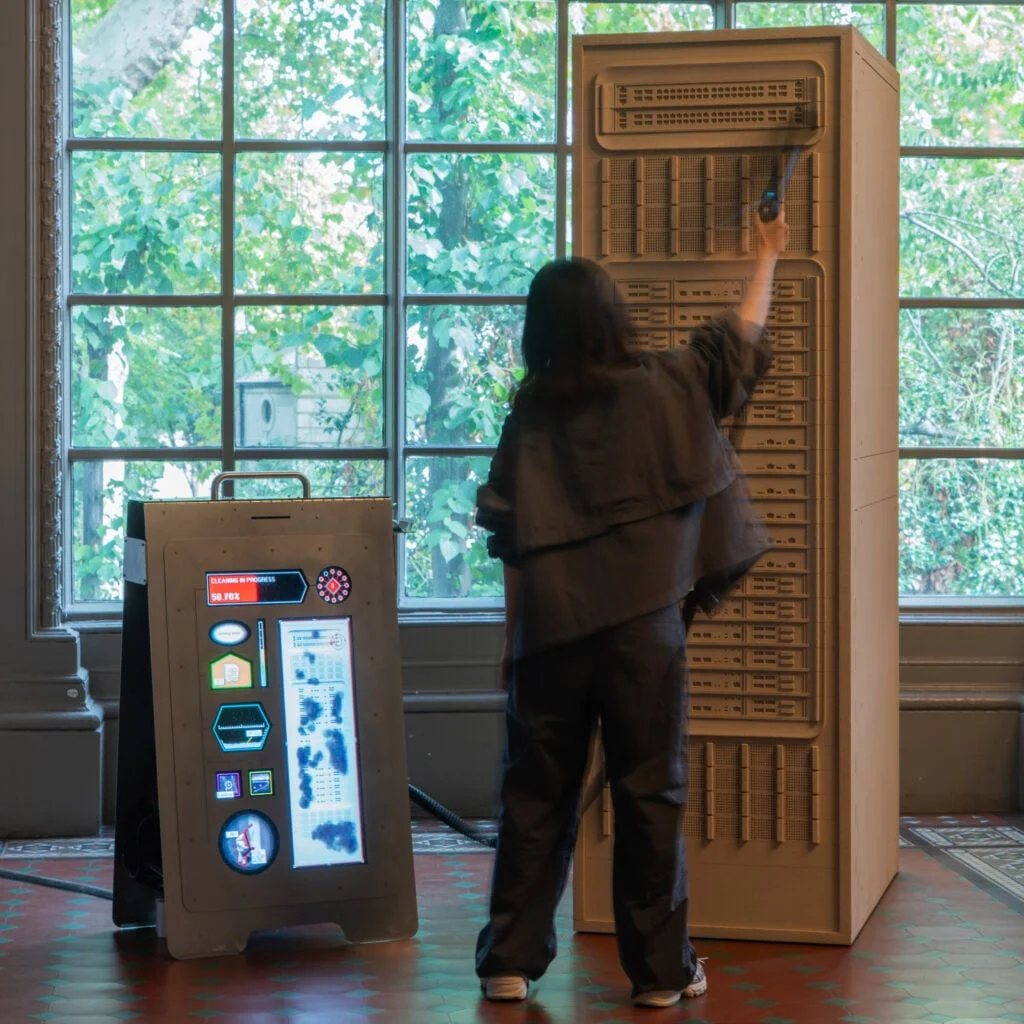
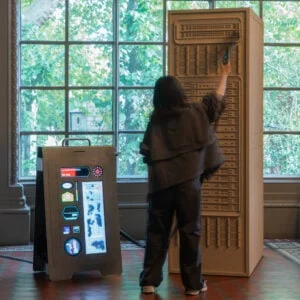
Created by art and design duo Playfool, the game installation was shown at London’s Victoria and Albert Museum. Visitors used a decommissioned vacuum from a data centre to remove as much digital “dust” as they could from a replica server in 60 seconds. The subject may be invisible to most users of data centres, but the cleaning work is tangible here.
Playfool links that routine to the physical labour supporting the AI boom, and to the performance systems used in Amazon fulfilment centres. The duo said that, during a visit to one of those centres, they found internal video games workers could play to gamify their tasks, with live rankings showing how they performed against colleagues. The comparison is pointed: a game can make repetitive work feel more engaging while keeping its pace and measurement in view.
Photographs
Photographs
The point of *The Server* is simple, and more significant than it first appears: AI depends on physical systems and ongoing human work, even when the screen makes it feel effortless.
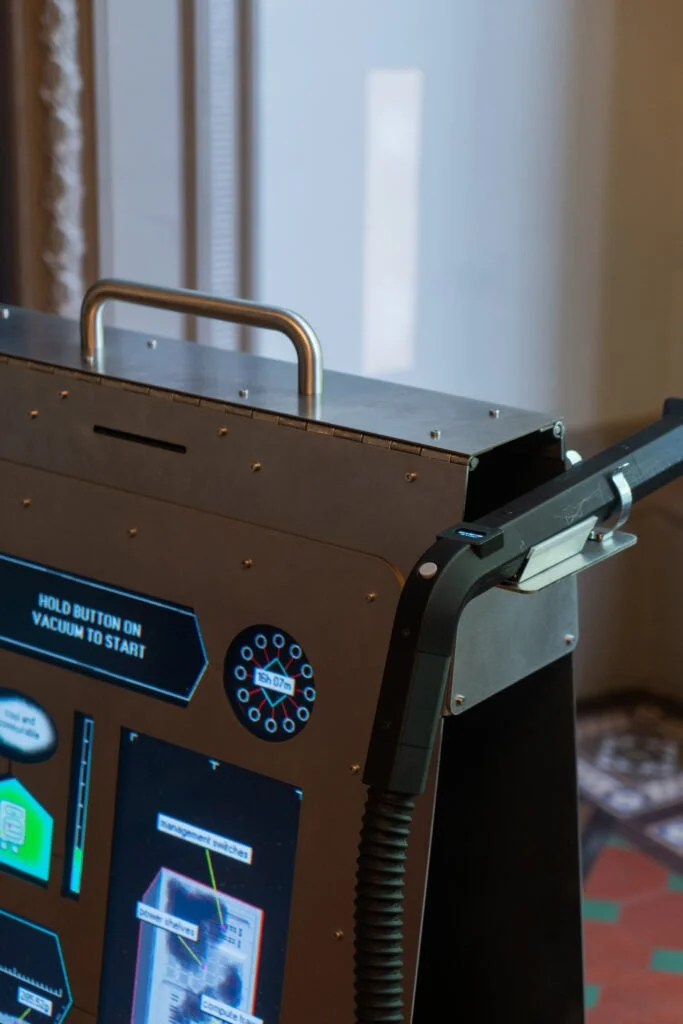
Created by Playfool’s Daniel Coppen and Saki Maruyama, the installation pairs a replica of Nvidia’s latest AI server with a vacuum module. Players use a genuine data centre vacuum to clear digital dust from the replica, while screens show clouds of digital particulates and score their performance. The game makes maintenance visible—and draws a pointed comparison with the work required to preserve museum collections.
At the V&A, that comparison lands. The museum’s objects and the digital services people rely on both need care to remain available. As Coppen and Maruyama put it, creation brings “an infinite responsibility of maintenance.” AI makes that responsibility easy to miss: its workings are opaque, and its physical foundations—from undersea fibre-optic cables to data centres—are largely out of sight.
That blind spot is growing alongside the infrastructure. The fragment cites a projection that US data centre construction will double to meet AI demand, while global spending on data centre infrastructure is projected to exceed [$800 billion a year in 2026](https://www.dezeen.com/2026/09/29/data-centres-design-architecture-hyperscale-ai/). Those figures don’t tell us who will do the upkeep, or how its costs will be shared. That’s the question the installation leaves hanging.
Commissioned through the V&A Museum’s Emerging Designer scheme, *The Server* uses a game to open discussion about AI and digital caregiving. Playfool argues that play can give people a way to experience complex ideas and act on them. Here, the score is part of the point: the upkeep that usually disappears from view becomes work players can see and perform.
For related coverage, see a Basrua toy that makes an “ear piercing hum” when squeezed, a 60-building data centre by Gensler, and an East London data centre approved as part of the Truman Brewery masterplan. The exhibition ran at the V&A from 12 to 18 September. More architecture and design events are listed in the [Dezeen Events Guide](https://www.dezeen.com/eventsguide/). The article was titled [“Playfool spotlights hidden digital labour in data centre cleaning game at the V&A”](https://www.dezeen.com/2026/11/09/playfool-studio-data-server-cleaning-game-va/).
Players handle a genuine data centre vacuum
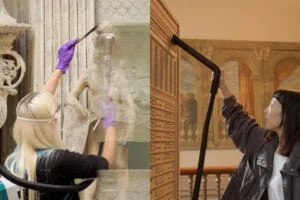
The installation compares museum conservation and data server maintenance work
Players vacuum digital dust from a replica data server
Players receive a score for their performance during the game

Discussion
Sign in to join the discussion.