Researchers from MIT have engineered bacteria that could enable plants to detect environmental threats and respond proactively.
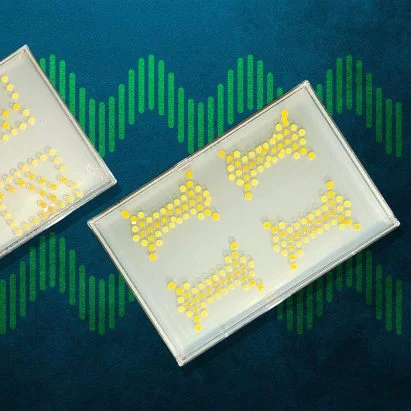
At MIT, a team has successfully engineered bacteria that could allow plants to react to environmental changes like drought or pest attacks. Published in the journal Nature Chemical Biology, this study showcases a new approach in synthetic biology by using living cells as biological signal-senders, reminiscent of the way transistors operate in digital technology.
Understanding the Engineering Process
The researchers utilized the common bacterium Pantoea agglomerans, known for colonizing plant surfaces, placing them in a controlled growth medium on petri dishes. These engineered cells are capable of detecting specific molecules in their environment, triggering a response that sends messages within a network of cells. The significance of light and nutrient levels in plant health cannot be overstated, as they directly impact growth and resilience. That's why the ability for plants to sense these changes has huge implications.
"We can get toward more complicated functions by linking up simpler functions in individual cells," stated Christopher Voigt, head of MIT’s Department of Biological Engineering and senior author of the study. This sentiment underlines an important innovation: the concept of scale. By connecting various simple functions into a cohesive network, the researchers are creating a more sophisticated communication system within plants. If cells can begin processing complex information, that opens the door to innovative agricultural applications.
Comparative Analysis with Digital Technology
Interestingly, Voigt compares the potential of these bacterial circuits to that of smartphones, claiming, "There's nothing that your iPhone can do that these circuits couldn't do." While this may sound ambitious, it reflects a reality—combining biology and technology can create powerful tools. The study revealed circuits made from colonies of bacteria that are capable of processing dual input signals. They also developed a system that enables one signal to be dispatched to various locations simultaneously. This hints at an exciting new horizon in plant adaptability to external challenges.
In an age where technology increasingly dictates agricultural productivity, the reliance on data and responsiveness becomes crucial. Bacteria engineered to react to environmental cues might offer farmers a real-time monitoring system for plant health, working alongside existing technologies. Still, it's not all straightforward. The inherent biological variability presents challenges that digital systems typically do not face—such as the need for specific living conditions for these bacteria to thrive. That's something to consider.
Implications for Agriculture
The implications of this work extend into agricultural practices, particularly the idea of coating plant leaves or roots with these engineered bacterial circuits. Enhanced plants could become adept at adjusting their outputs based on real-time environmental factors, which is pivotal in regions susceptible to drought or pest issues. Voigt elaborated, "If you have bacteria on the root of a plant, or the plant itself is doing the computing, running a simple calculation overnight is fast enough relative to a growth season." This capacity for real-time feedback can potentially reshape farming tactics.
However, this isn't about supplanting traditional farming methods. Rather, it's about augmenting them. The possibility of using living organisms to monitor conditions and react accordingly could be transformative, but it runs into the practical difficulty of scale—can these bacteria be mass-produced and effectively deployed? And what does that mean for existing agricultural systems?
Technological Boundaries
Yet, the researchers emphasize that their intention isn't to replace existing technologies. "We're not trying to replace computers, but rather put computational control into biology," Voigt stated. This acknowledgment hints at an inherent limitation—while biological computation may offer innovative solutions, its slower pace compared to synthetic systems poses challenges for widespread adoption. If you're working in this space, you might find that integration of biology into technology requires a paradigm shift, rather than mere modification.
This isn't merely a mechanical tweak—it's a philosophical change in how we think about our tools. The reliance on engineered biological systems could open a dialogue about sustainability and ethics in agriculture. As we're grappling with climate change and resource shortages, methods that encourage ecological resilience become all the more pertinent.
Looking Ahead: A New Frontier?
Lead author Hamid Doosthosseini, alongside former postdoctoral researcher Haorong Chen, contributed significantly to the study, which received funding from the US Defense Advanced Research Projects Agency (DARPA) and the US Intelligence Advanced Research Projects Activity. Their endorsement not only adds credibility to MIT's findings but also indicates possible governmental interest in these technologies for national agricultural resilience.
This MIT initiative aligns with other research in utilizing biological elements for technological innovations, similar to the University of Cambridge's advancements in algae-based batteries. As researchers navigate these new territories in synthetic biology, the potential applications for agricultural resilience and efficiency become increasingly clear. It’s a field worth watching closely as developments unfold, not just for the potential benefits but also for the challenges that will inevitably emerge alongside them.
Imagery provided by MIT.
Discussion
Sign in to join the discussion.