Casa Mouda’s AiMe Gallery and AiMe Concept bring West African design to two Lagos locations, showcasing furniture and craft made through local collaboration.
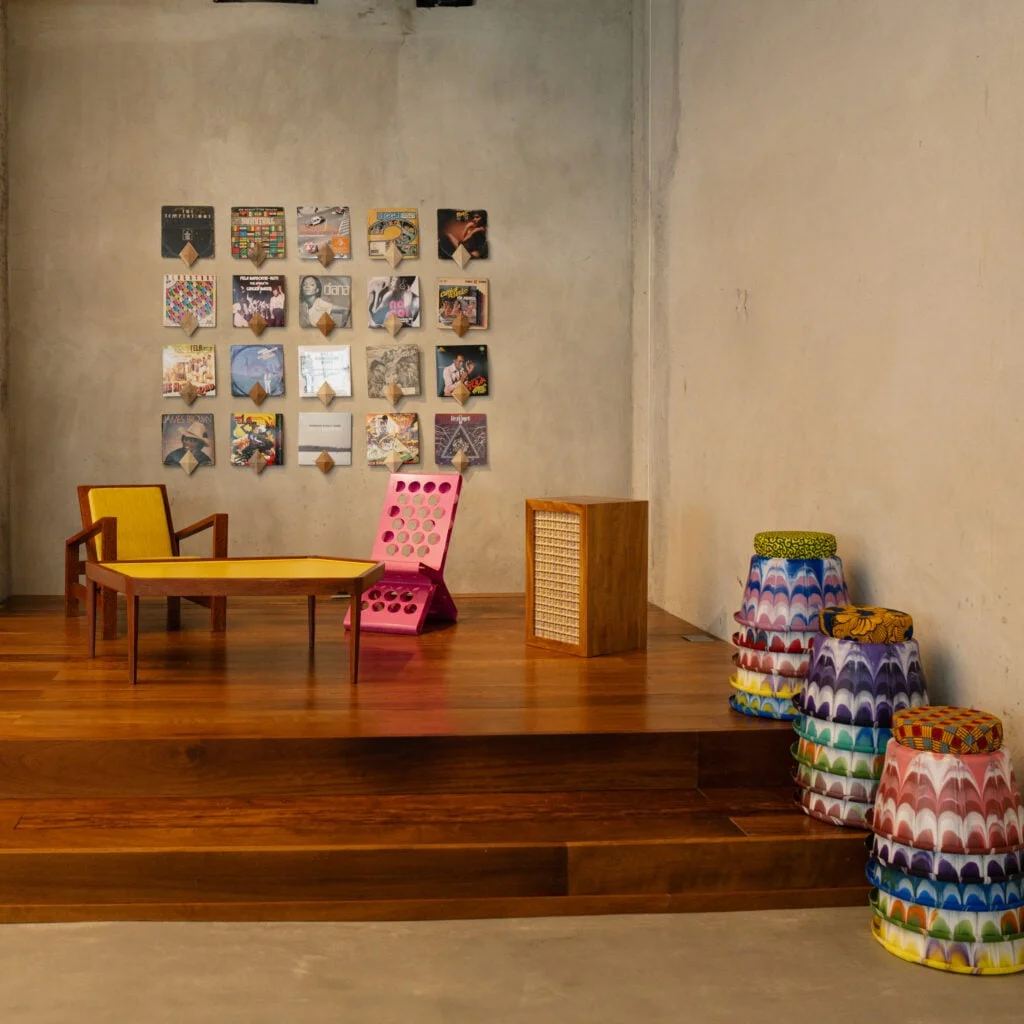
Lagos has two new venues dedicated to putting West African design in front of the public. The significance is bigger than a pair of openings: Casa Mouda is building places where regional design can be exhibited and encountered locally.
The creative studio worked with Papa Omotayo, Gemma Sfeir and Nifemi Marcus-Bello on the spaces. AiMe Gallery sits inside Eko Hotel; AiMe Concept is on Eko Atlantic. Casa Mouda marked both launches with an exhibition promoting design from across West Africa. For designers working in the region, that gives the initiative a clear purpose: visibility, backed by physical spaces in two distinct Lagos locations.
Two venues, one platform
AiMe Concept’s metal shelving gives Marcus-Bello’s work a prominent place in the exhibition. The venues’ shared program makes Casa Mouda’s aim tangible, though the opening alone doesn’t show how regularly they’ll host exhibitions or how broad that platform will become. That’s the question to watch: a launch can draw attention, but sustained programming is what gives a design venue lasting influence.
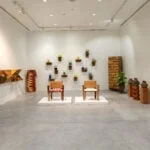
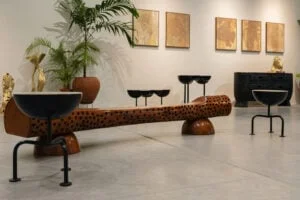
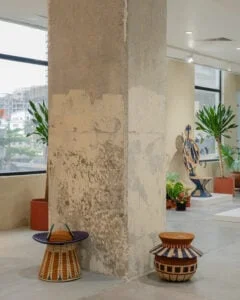
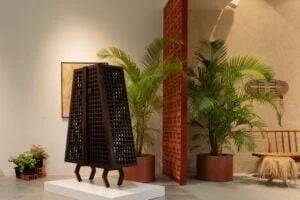
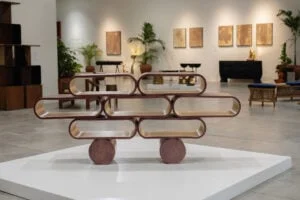
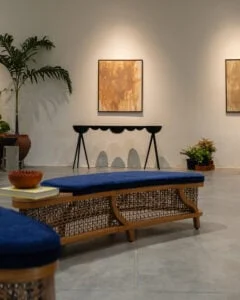
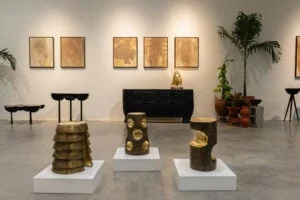
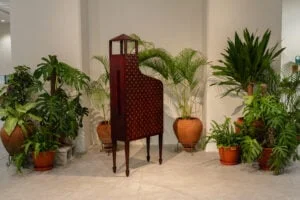
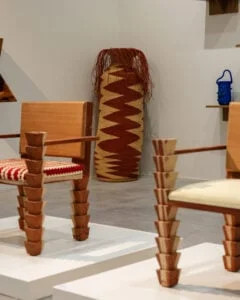
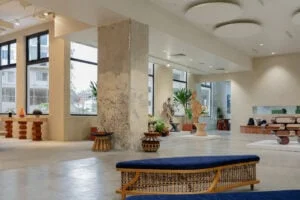
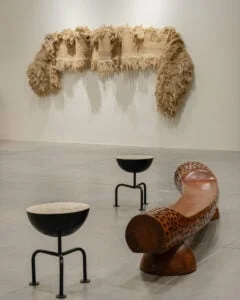
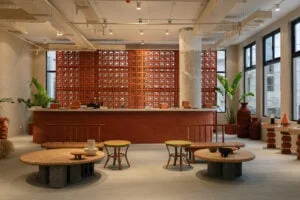
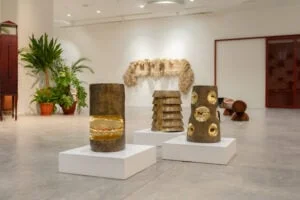
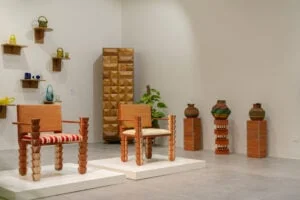
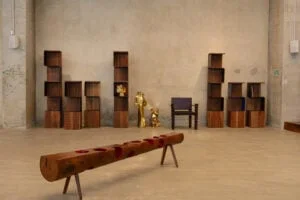
Casa Mouda’s Lagos project makes its strongest case through production. Designers with different backgrounds are making work in the city, and the exhibition shows what local collaboration can bring to both contemporary furniture and traditional craft.
Spaces built around Lagos production
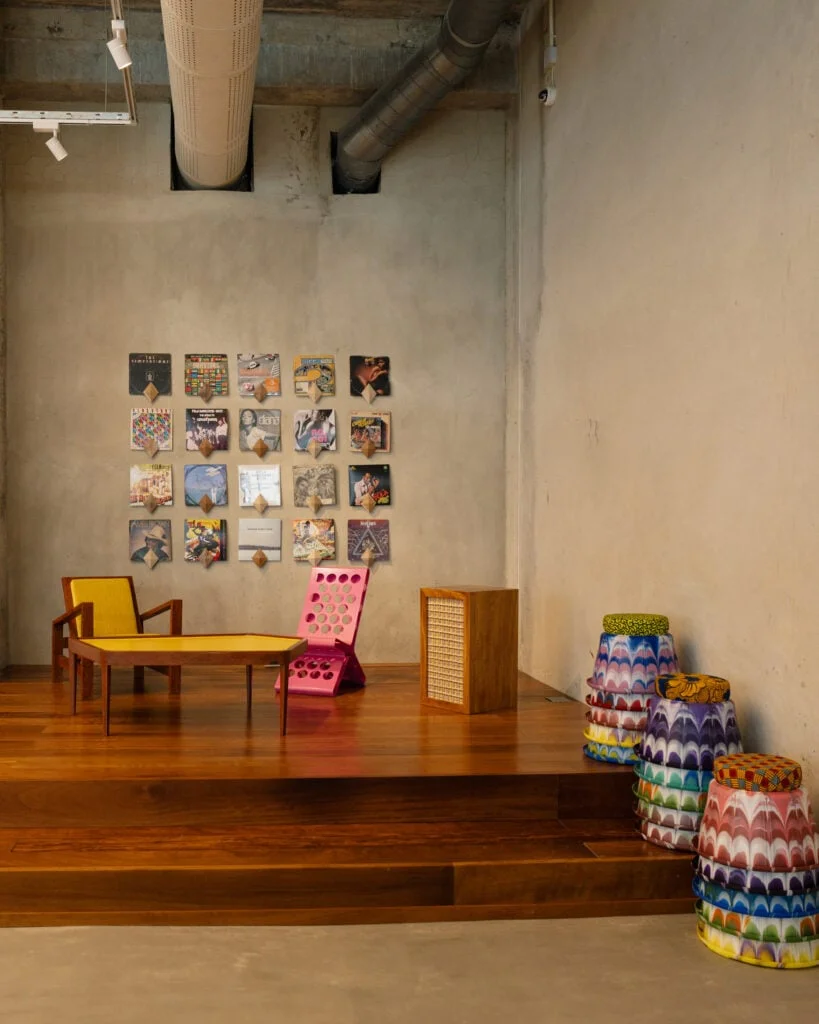
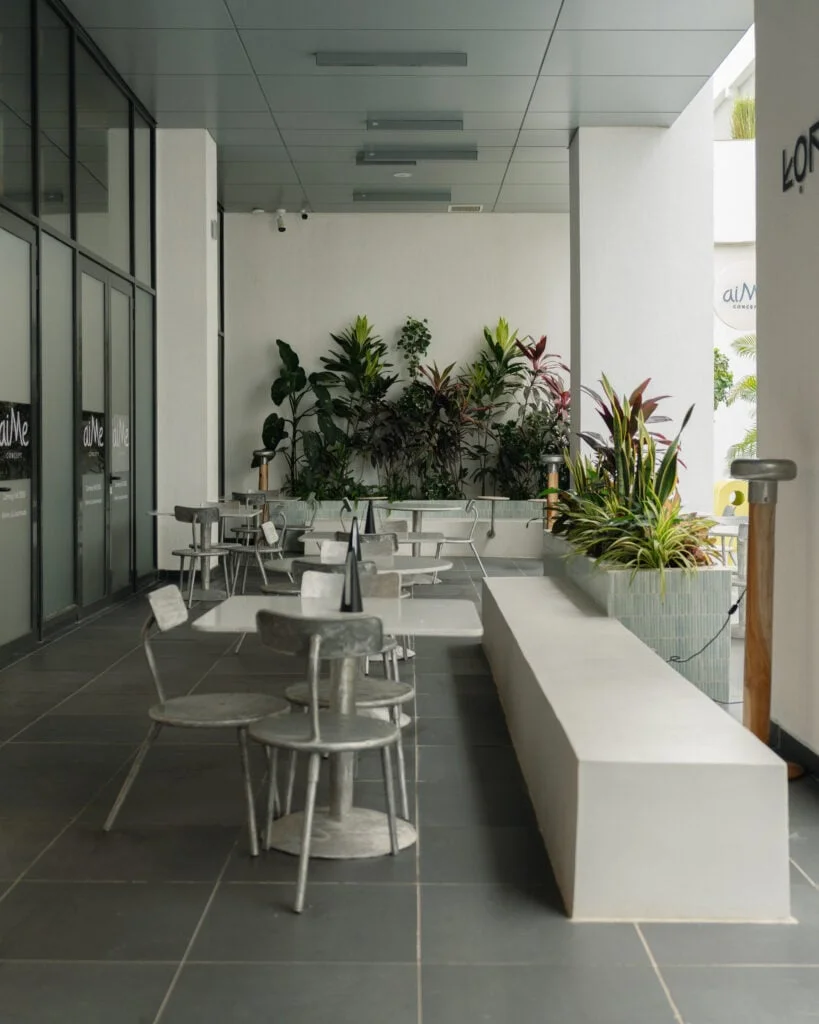
Lagos-based architect Omotayo redesigned aiMe Gallery at the entrance to the hotel’s conference centre. Nearby, aiMe Concept occupies a storefront in the wider Eko Atlantic development; its interior was created with designer Sfeir and Marcus-Bello. Both spaces leave concrete walls and columns exposed, softened by warmer details such as the earthen bar and screen at the gallery.
For founder Caline Chagoury Moudaber, the first Casa Mouda chapter was a way to recognize designers who had helped lay the groundwork. She said many makers on the continent take on work that, elsewhere, would be supported by an entire industry. That observation gives the exhibition a purpose beyond display: it points to the production networks these designers are building.
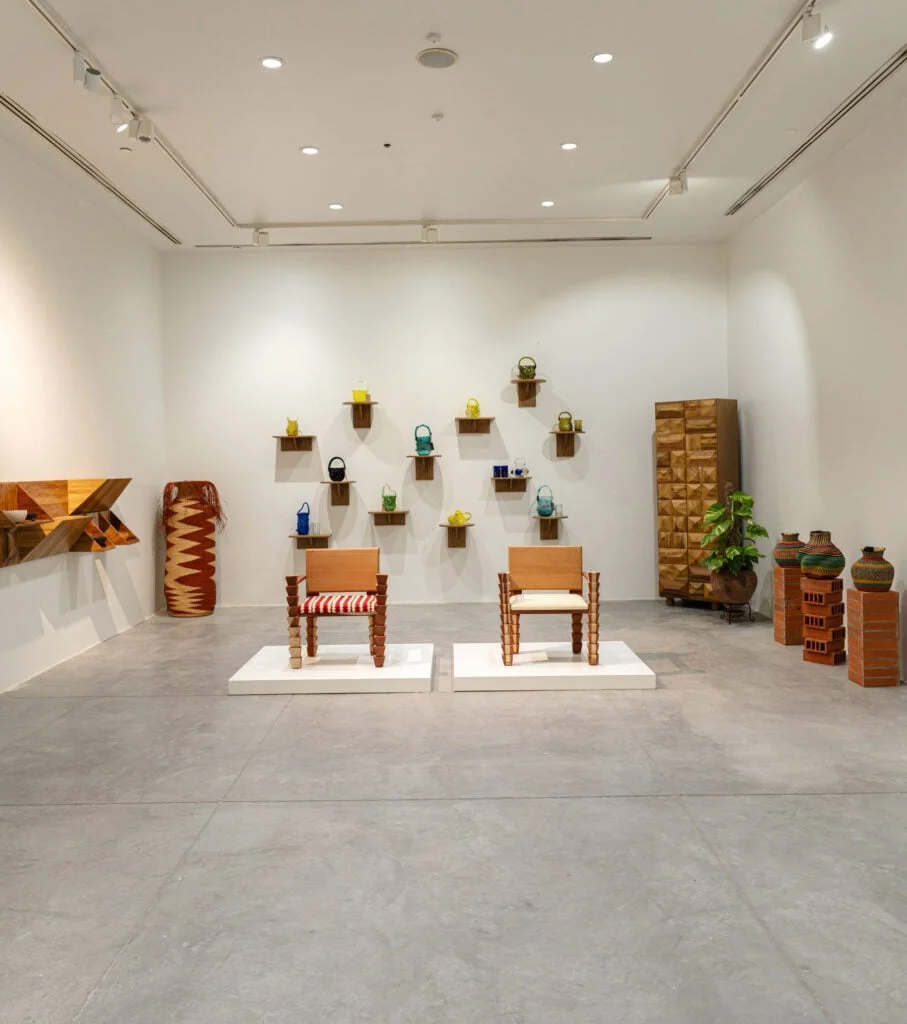
The exhibitors include Lagos-based designers and others who have chosen to work in the city. American designer Germane Barnes, for example, collaborated with Casa Mouda to produce a wooden Corona Chair with inverted pyramidal legs and his interpretation of a peacock chair in Lagos.
Marcus-Bello’s contribution extends from the interiors to the furniture: he designed permanent hospitality seating for aiMe Concept and showed his LM stools and M2 shelves. The pieces offer a quieter, more minimalist expression than the large metal collectible designs for which he is known. Chagoury Moudaber credited him with years of work to create practical routes into production.
Craft sits alongside that modern furniture. Jean Servais Somian, working with Casa Mouda, presented bronze and wood pieces ranging from a cabinet with gridded wooden doors to an oval-shelf console, painted-recess stools and textured bronze side tables. The range is persuasive because it shows several ways one maker can work with material and form.
Other contributions bring distinct references into the mix. French studio Hall Haus combined metal basketball hoops and chairs with African aesthetics and Parisian urban ephemera. Moroccan designer Hajar Daide paired Nigerian woven-wood techniques with rich blue Moroccan fabric in her Friction Bench.
More than a furniture display
Casa Mouda has also treated sound and retail as part of the visitor experience. The project worked with US musician Malloy James on custom speakers for the aiMe Gallery entrance, while aiMe Concept has a listening station. Both spaces make room to sell regional craft, including textiles, bags and jewellery.
Chagoury Moudaber described the process as an exchange: established designers pass on what they have learned, while newer participants bring different techniques and ideas. Whether that collaboration becomes lasting infrastructure is still an open question. But the project’s focus on making, displaying and selling work in Lagos gives the initiative a more substantial ambition than a one-off showcase.
Recent design showcases elsewhere include the inaugural Walker Design Triennial in Minnesota and The Mindcraft Project, a Danish design initiative curated by Christian + Jade. Casa Mouda’s distinguishing proposition is its direct attention to the people and production capacity already taking shape in Lagos.
Discussion
Sign in to join the discussion.