Nike plans to launch Tuned Air trainers next year, using 3D-printed midsoles to vary cushioning and support across the foot.
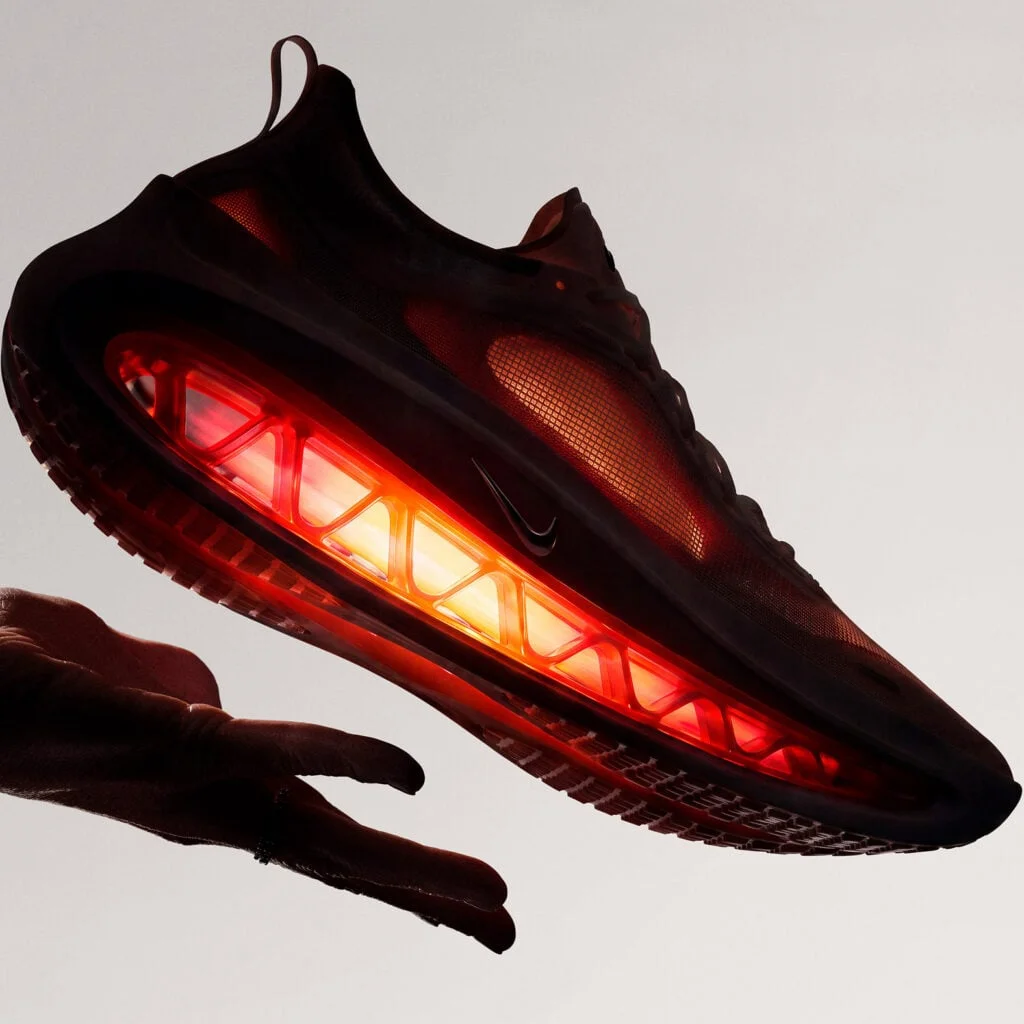
Nike’s next air-cushioned shoe platform puts control of the midsole’s feel at the center of its design. Tuned Air uses 3D printing and selective lamination to vary cushioning and support across different parts of the foot, with its first trainer expected next year. The proposal is less about adding another airbag shape than changing how designers can set up the air unit from one area to another. That distinction matters: a shoe can be cushioned in general and still feel poorly matched to how a particular part of the foot meets the ground.
Phil McCartney, Nike’s chief innovation, design and product officer, described the technology as “a revolution, not an evolution” in an interview at the LeBron James Innovation Center in Oregon. The approach gives Nike greater control over the air unit’s internal structure, height and response, including the ability to tune the heel differently from the forefoot. That makes the design brief more specific than simply asking for softness or spring. It also leaves the finished experience dependent on how those adjustments work together once the unit is paired with the rest of the shoe.
Adjusting the air unit underfoot
The airbags are built from layers of ink, with the manufacturing process combining proprietary 3D printing and selective lamination. Nike says that lets its designers shape how the midsole behaves without relying on conventional air unit geometry. In practical terms, the process gives the design team more ways to vary the structure inside the unit, rather than treating the air chamber as a single, uniform component. That flexibility is a manufacturing claim; its value to a wearer will depend on whether the resulting changes can be felt and are useful in motion.
“If Max Air is about maximal cushioning and impact protection, Zoom Air is more about responsiveness and snappiness,” McCartney said. Tuned Air, he explained, can adjust the sensation within the airbag itself. The aim is to combine cushioning with a more deliberate distribution of support across the shoe. Those are familiar goals in footwear design, but Tuned Air puts the focus on controlling them through the air unit’s internal construction. The test is whether that control produces a clear difference underfoot, rather than a technical distinction that’s most apparent in a product explanation.
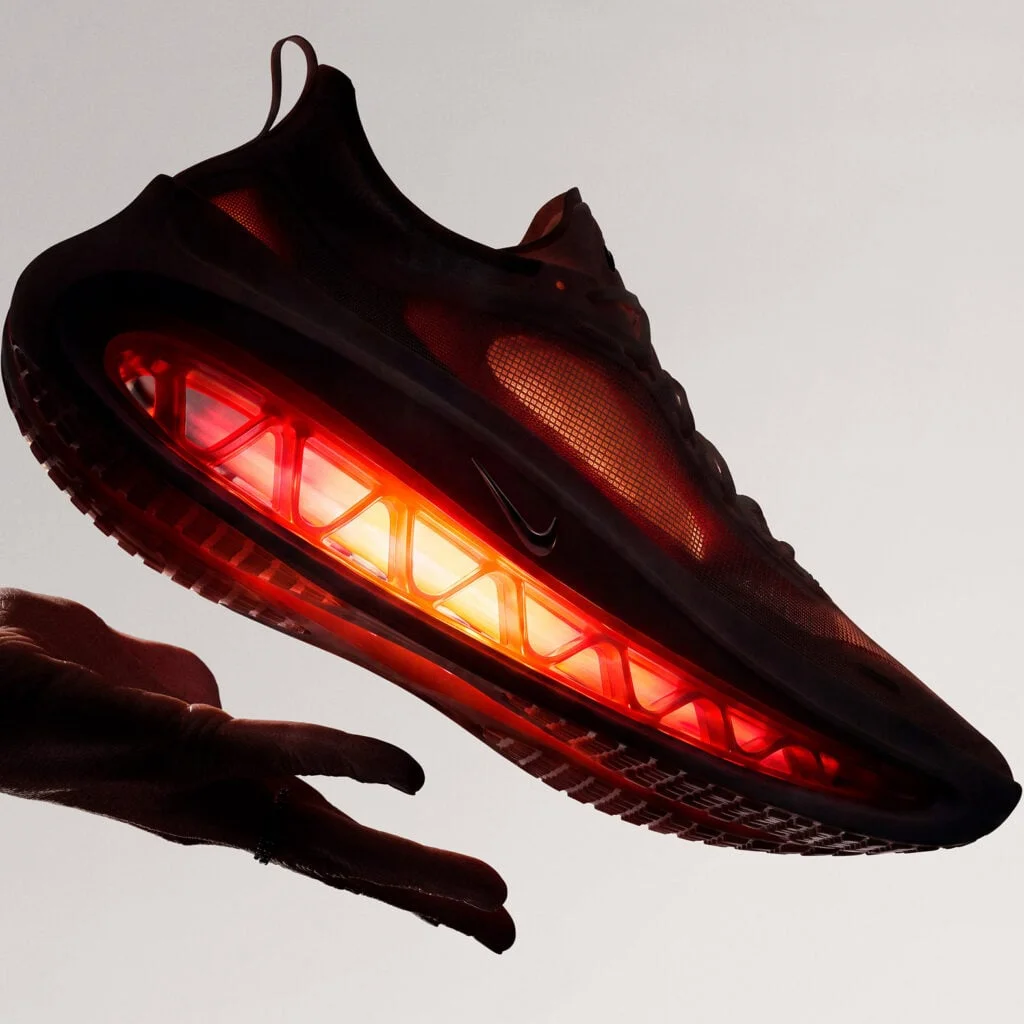
The platform extends a footwear program that began when Nike CEO Phil Knight worked with inventor Frank Rudy on gas-filled cushioning in the late 1970s. Nike Air Tailwind followed in 1978, with Air Max arriving in the 1980s and Air Zoom in the 1990s. That history gives the new system a clear lineage, but lineage alone doesn’t establish how much the design changes the experience of running or training. Each generation has to earn its place through the shoe it produces.
McCartney said the appeal of air has long rested on its combination of low weight, cushioning and resilience. Tuned Air’s production method, he said, could expand how those qualities are expressed in a shoe. Here’s the thing: additional control is only useful if it helps designers make choices that matter to wearers. This is more significant than it looks, but the significance is still a design possibility, not a demonstrated result in a finished trainer.
Design possibilities beyond the prototype
Nike has shown concept images of a running shoe, but the trainer remains in development. McCartney expects the finished design to stay close to the render, while allowing for some changes. The airbag itself is expected to remain close to the prototype, and the commercial shoe will retain a full-length visible unit. That gives the concept a fairly defined outline while leaving room for the work that often happens between a design image and production. What matters now is how the upper, fit and cushioning come together as one shoe.
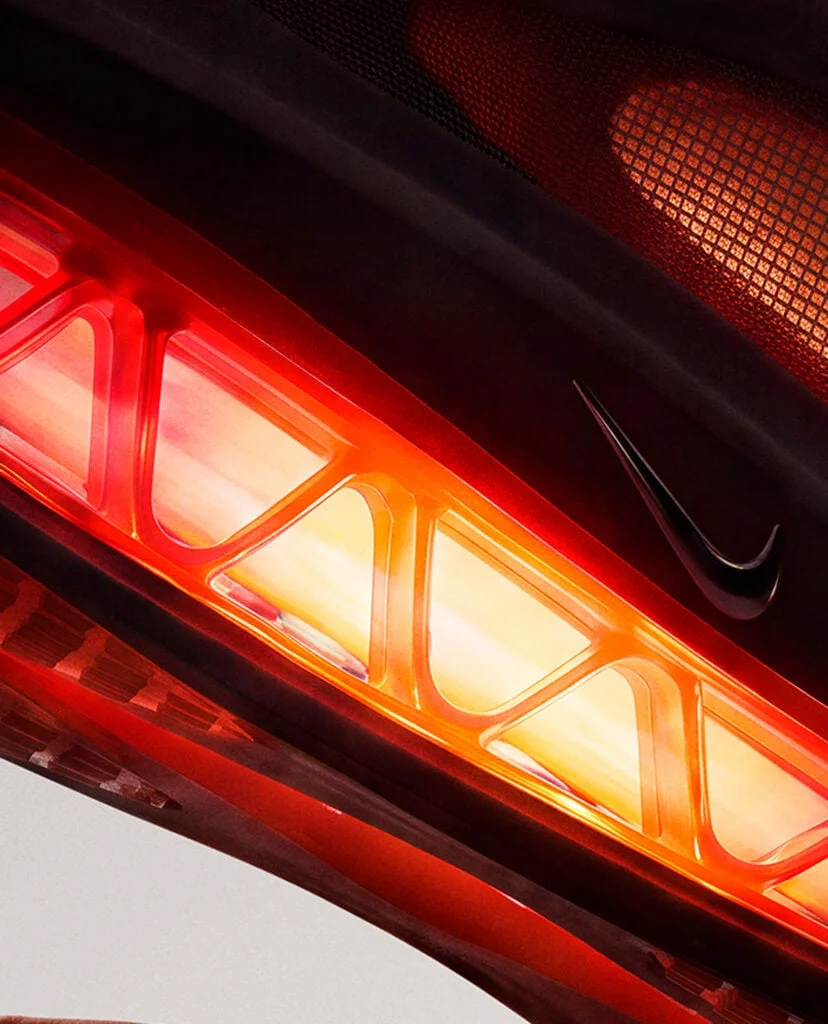
The upper is still being developed to complement the lightweight, tuned cushioning. McCartney sees the new production process as a broader design tool: it may enable visual treatments and geometries that earlier manufacturing limits made difficult to pursue. That wider remit could shape the shoe’s appearance as well as its underfoot feel. Yet the range of forms a process allows doesn’t tell us which forms Nike will choose, or how well they’ll hold up in a wearable product.
“It also creates this canvas for all the design explorations that we’ve always wanted to do,” he said. Nike is examining how to communicate the technology through different forms and appearances, though the company has not yet specified what those options will be. That leaves a gap between the promise of design freedom and what a customer will actually see. And yet, the unfinished nature of the upper is also where the system’s ambitions become concrete: the parts have to work together, not simply look new in a render.
Air remains Nike’s central design platform
Tuned Air sits within a wider effort to use air in footwear and apparel. Nike has also presented an inflating Air Milano Jacket for the 2026 Winter Olympics and Radical AirFlow shirts designed to keep wearers cool through a fabric structure that uses more material. These examples point to air as a design principle the company is exploring across different kinds of products, with different intended functions. The connection is the material and the engineering approach; the garments don’t establish how Tuned Air will perform in a shoe.
Among the innovation areas McCartney oversees, he said air holds the most creative interest and potential for athlete benefit. His definition of athlete is broad: anyone with a body. With Tuned Air, Nike is bringing that focus back to footwear, where the next step will be translating a newly adjustable midsole into a finished shoe. For you as a reader, the useful question is not how many design options the process unlocks, but whether the launched trainer makes its adjustable construction legible through a noticeably different ride. A new tool can widen the choices available to designers; it can’t, by itself, tell us whether they’ve made the right ones.
What the launch will need to show
The first trainer will give Nike a chance to show how its claims translate outside concept imagery. The company has described greater control over the air unit’s structure and response, but the source material doesn’t establish how those choices will affect comfort, durability or performance in use. Those questions are part of evaluating any new footwear system, especially one whose central pitch is that it can tune different regions of the midsole. The answer will come from the finished product and how it behaves on foot.
(And this is the part most people overlook.) Manufacturing freedom isn’t the same as a better shoe. The design still has to balance the air unit with the upper and the way the whole trainer is intended to feel. More control, more choices. Nike’s next challenge is making those choices clear in a product people can actually wear.
Discussion
Sign in to join the discussion.