Roos Gortzak, the artistic director of Groninger Museum, is revitalizing the institution's commitment to contemporary art while emphasizing diverse voices within its acclaimed architecture.
Reimagining the Groninger Museum
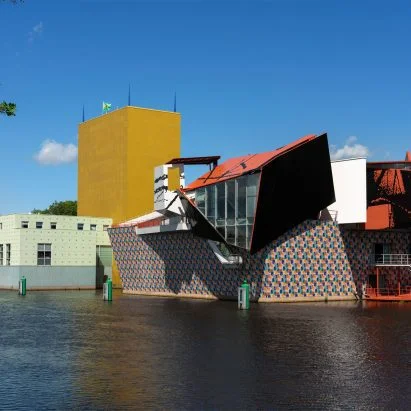
Under the leadership of artistic director Roos Gortzak, the Groninger Museum is embarking on a significant transformation focused on contemporary art. Gortzak's vision aims to forge a deeper connection between the museum's distinctive postmodern architecture and its artistic offerings. She asserts that the uniqueness of the building influences her curatorial choices, stating, "I would never have made the same artistic course somewhere else as I'm doing here."
The Impact of Architecture on Art
The Groninger Museum, which opened its doors in 1994, stands as a noteworthy example of postmodern design, consisting of three interconnected pavilions, each crafted by a different architect. Italian designer Alessandro Mendini led the project, creating a striking yellow tower, flanked by vibrant pink and green volumes, alongside contributions from Philippe Starck and the firm Coop Himmelb(l)au. Despite this eye-catching architecture, Gortzak notes that its visibility and impact haven't mirrored that of world-renowned institutions like Gehry's Guggenheim Bilbao.
A Call for Recognition
"It totally deserves to be more famous," Gortzak remarked about the museum, pointing out that its architectural and cultural significance is often overlooked. She emphasizes the need for museums to act as platforms for important societal conversations, stating, "There's so many important values that should be shared... how do you connect?" Gortzak is dedicated to infusing the museum with ideas that resonate in today's world.
Navigating Current Challenges
The contemporary museum environment faces numerous hurdles, including dwindling audiences and funding challenges. Gortzak stresses the importance of redefining how museums engage their visitors. "It's not self-evident to go to a museum," she noted, indicating that successful institutions must develop compelling narratives to attract diverse audiences.
Long-Term Vision and Renewed Programming
Gortzak's tenure at the Groninger Museum, which began in February 2025, aims to reestablish a focus on contemporary art, reminiscent of the museum's formative years in the 1990s. In September, new programming will launch, characterized by its thematic relevance and the intention to reconnect with the museum's architectural heritage.
Core Values Unveiled
In her approach, Gortzak identifies three fundamental values that echo the museum's architectural philosophy: "experimental," "interdisciplinary," and "collective." She believes that these values are strikingly relevant today and will guide the museum's future direction.
Championing Diverse Voices
A key goal for Gortzak is to enhance diversity among the artists represented within the museum. She recognizes the historical absence of female and non-binary perspectives in previous programming, largely influenced by the museum's male-centric architectural narrative. The new direction aims to rebalance this with acquisitions that center on diverse voices, affirming that the museum is a place for all forms of expression.
Rethinking Visitor Experience
Gortzak points out that the layout of the Groninger Museum, which requires visitors to descend into exhibitions rather than ascend, challenges traditional art viewing paradigms. This intentional design suggests that art is accessible at all levels, not just at an elevated plane.
Engaging with Contemporary Themes
The museum's forthcoming exhibitions will encompass thought-provoking themes, one of which is titled The Architect and the Housewife: Cleaning the House, Building the Future. This exhibition invites discussions on power dynamics in everyday life and the intersection of domesticity and creativity. Gortzak envisions this introspective programming as a means to spotlight often ignored narratives about labor and creativity.
A Space for Exploration and Growth
In addressing the transformative potential of the museum, Gortzak highlights that the architectural intricacies of the Groninger are emblematic of the complexities of contemporary art. She encourages visitors to engage with challenging art, championing discomfort as an essential part of growth and understanding. "You don't always have to like or understand something," she states, stressing the value of confrontational experiences within artistic spaces.
The Future of the Groninger Museum
As the Groninger Museum sets forth with its new programming, it will launch with four interconnected exhibitions—an ambitious pivot towards a more inclusive and reflective narrative. Gortzak's commitment to representing frequently unheard voices and elevating diverse perspectives positions the museum as a progressive touchpoint in the contemporary art dialogue. "It's super exciting to be with this building that has all of that in it," she says, summing up the museum's revitalized ethos moving forward.
Photography courtesy of the Groninger Museum.
Discussion
Sign in to join the discussion.