Explore seven remarkable basketball courts that prioritize design while enhancing community engagement and resource management around the world.
Basketball courts serve as dynamic community hubs, and a new wave of designs demonstrates their potential to expand beyond mere gameplay. From eco-conscious flood mitigation features to visually captivating aesthetics, these courts are redefining their roles in urban and rural settings, becoming integral parts of the neighborhoods they inhabit rather than mere athletic facilities.
Sadler Close Multi-Use Games Area, UK
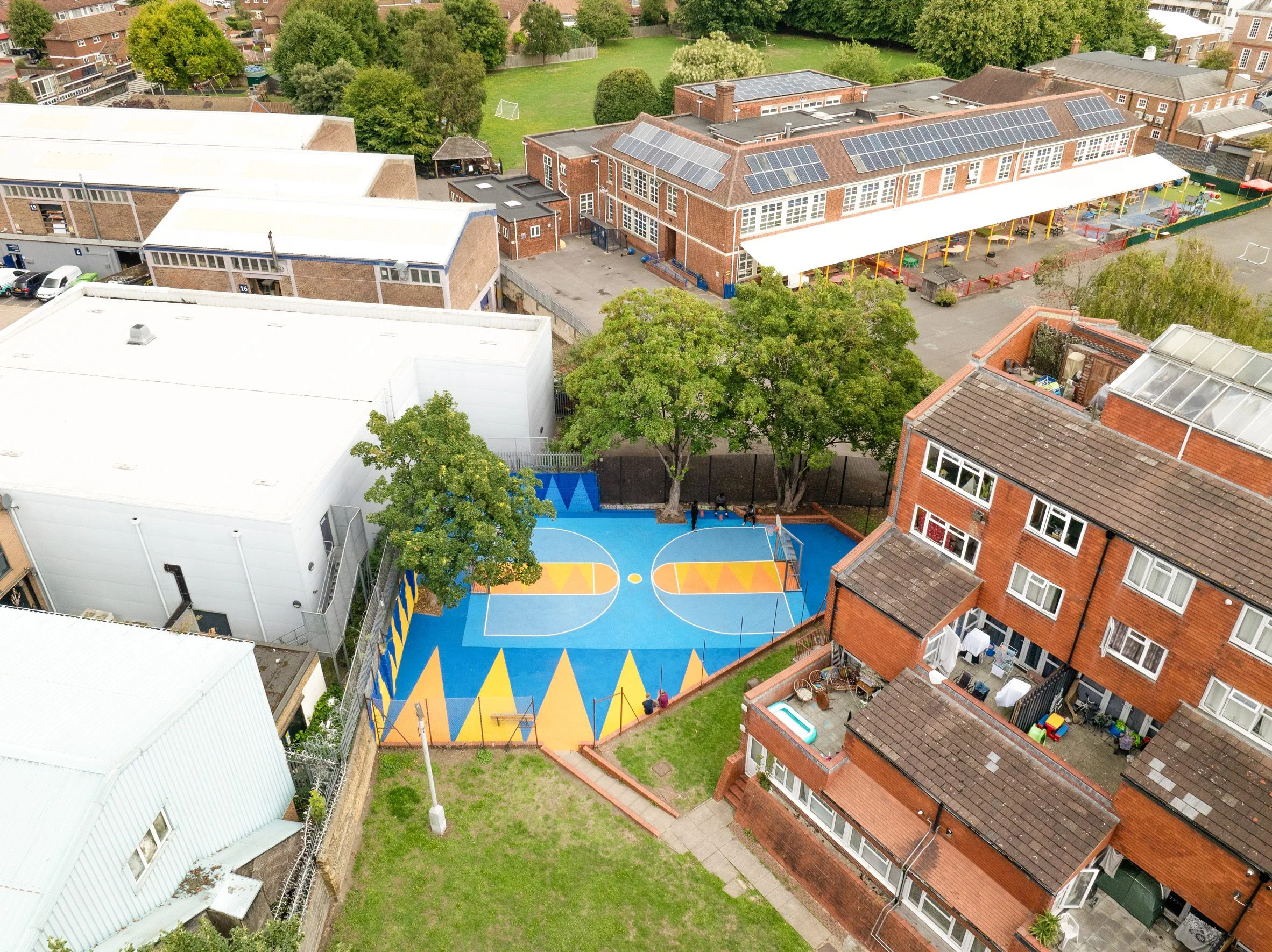
The Sadler Close Multi-Use Games Area, spearheaded by the POOR Collective in Mitcham, London, highlights community-driven renovation. This initiative didn't just replace damaged equipment; it transformed the court into a vibrant communal space. Non-slip paint and graphics were utilized to resonate with local tower blocks, creating a distinct identity for the court. Integrated safety features, such as improved lighting, contribute to its inviting nature. This approach exemplifies how aesthetic design can intersect with functionality, ensuring spaces are not only safe but also visually appealing.
ALMA Sports Facility, Chile
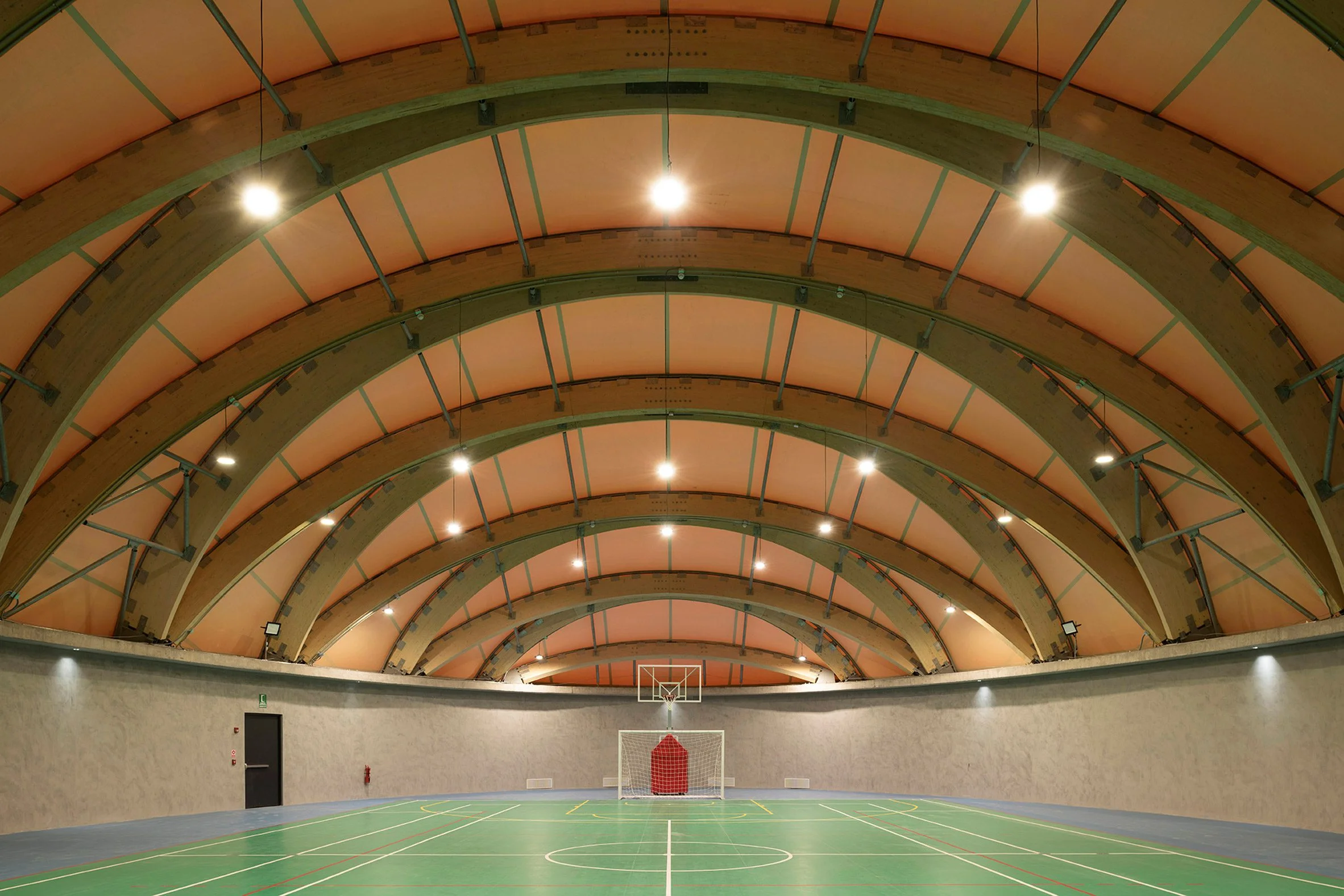
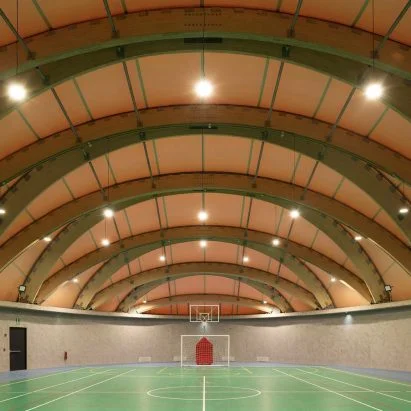
The ALMA Sports Facility, designed by Benjamín Murúa Arquitectos, showcases an intriguing blend of form and function. Its unique underground basketball court, nestled at the ALMA Observatory in Chile, isn't just about aesthetics; it's an all-weather facility that provides researchers with a practical and innovative space. The magnificent glulam trusses and dome design contribute to its visual impact while also emphasizing sustainability. Functionality is elevated by geothermal energy, reflecting a thoughtful integration of environmental awareness into sports architecture. This project signals a shift toward creating facilities that serve multiple roles, not merely as places for physical activity but as integral components of scientific research and outdoor engagement.
Huachiao Vibrant Sports Park, China
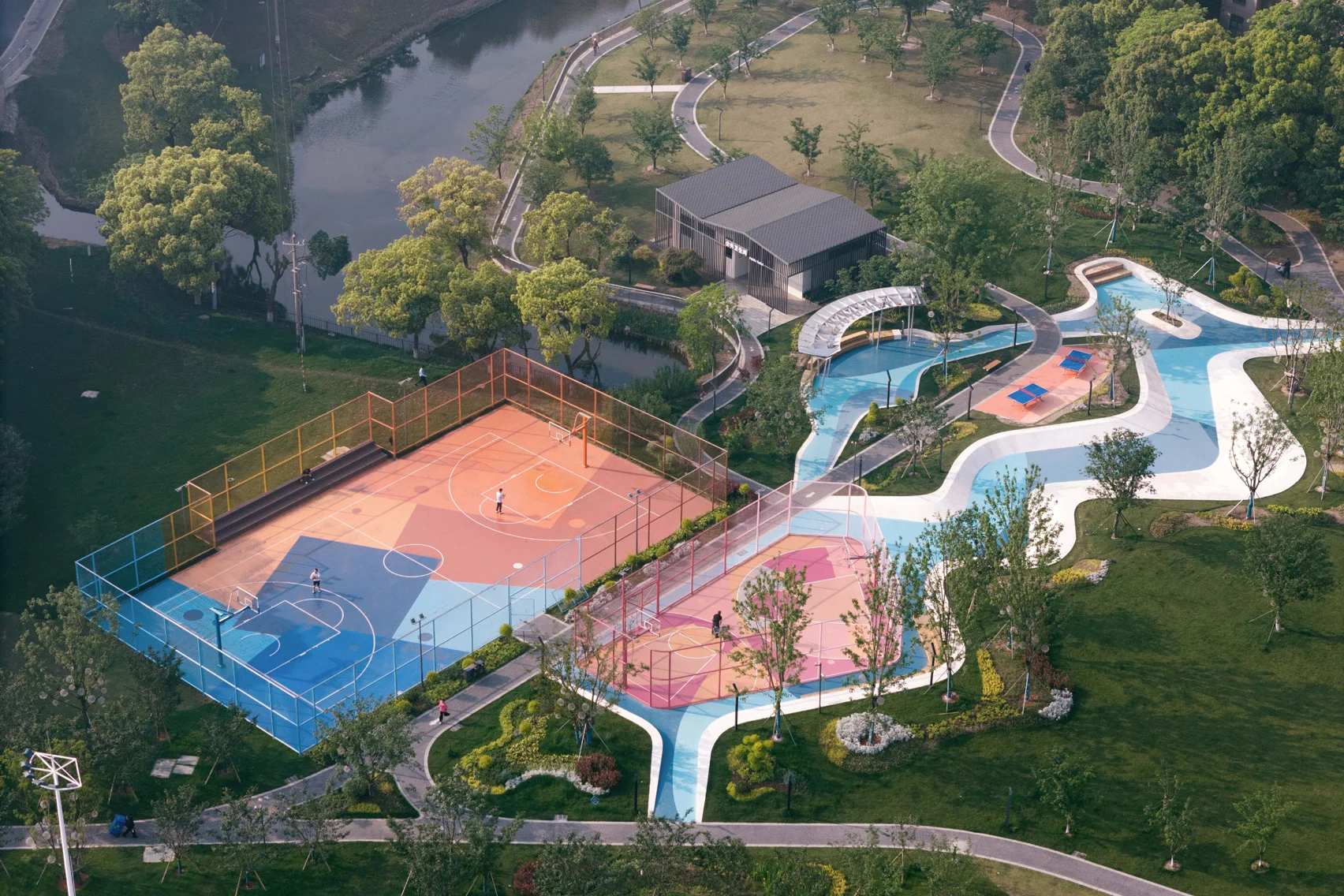
Huachiao Vibrant Sports Park, designed by SoBA Architects, marries playful design with functionality in Suzhou, China. The park's layout is inspired by traditional Kunqu opera "water sleeves," which infuses cultural elements into the architecture. Winding paths and vibrant colors enliven the space, creating a stimulating environment. The dual fenced-in basketball courts serve as focal points around which the public space orbits, allowing for community engagement far beyond just the game itself. This design illustrates a broader trend that recognizes the importance of culture in creating communal spaces—the significance, often overlooked, of how architecture reflects local identity and heritage.
Idaho Central Credit Union Arena, USA
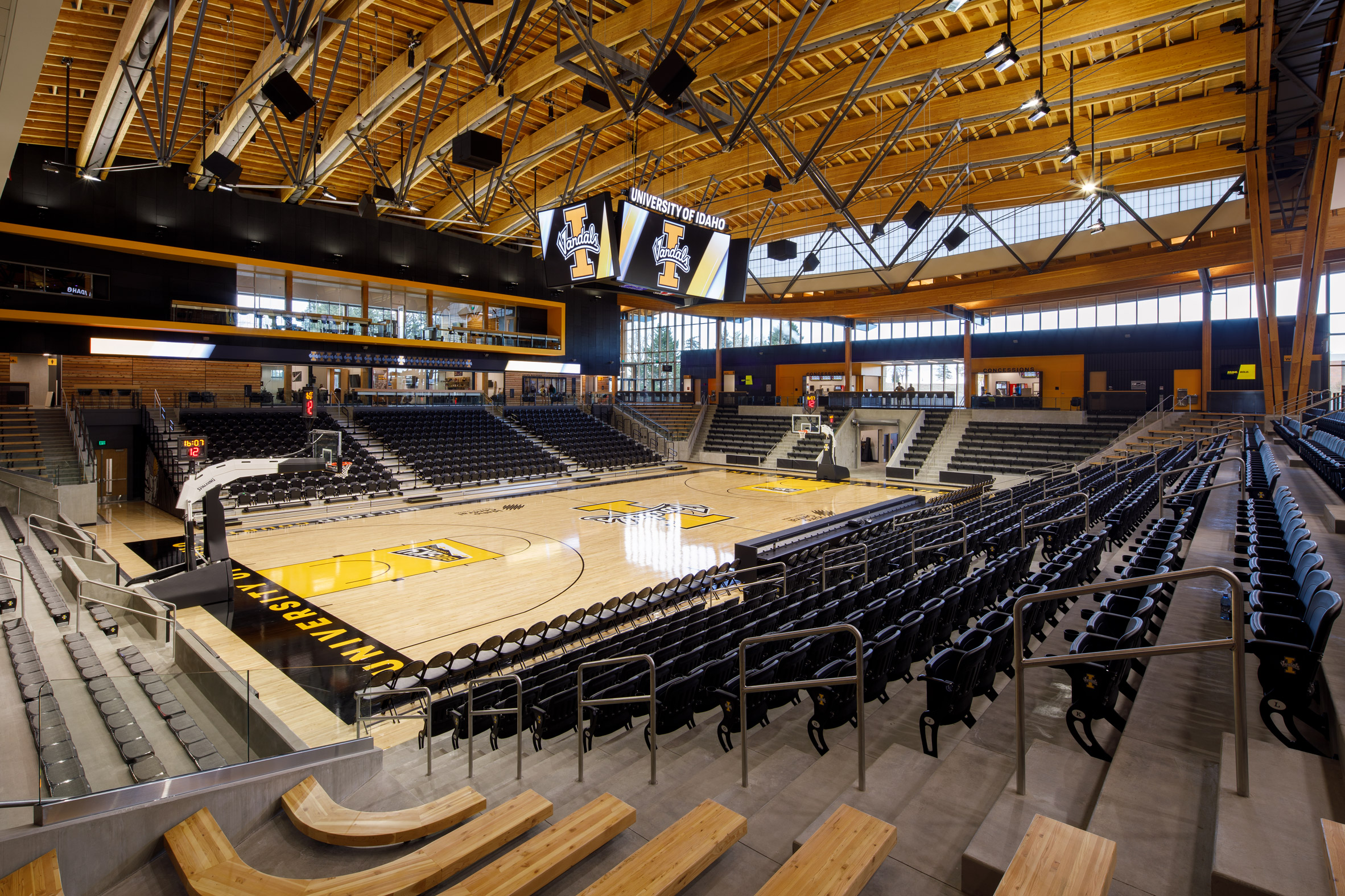
At the University of Idaho, the Idaho Central Credit Union Arena, designed by Opsis Architecture, challenges the traditional notions of sports facilities. Mass timber construction replaces conventional concrete, creating a striking environment with an arched ceiling. Inside, a standard collegiate court sits beneath this distinctive ceiling, which enhances the overall experience for players and spectators alike. By integrating additional courts, the facility maximizes its utility for a variety of activities. This construction approach not only emphasizes sustainability but also raises questions about the future of sports architecture. Will we see a shift away from concrete as a primary material? The wood's warmth and aesthetic appeal bring a uniquely inviting atmosphere to the sports environment.
The City Is A Playground, Netherlands
Eric Treillard's The City Is A Playground portable streetball kit, originating from the Design Academy Eindhoven, exemplifies the democratization of basketball. This clever innovation allows enthusiasts to create courts virtually anywhere, reflecting the versatility of urban play. The kit includes essentials like a hoop, ball, lights, and a speaker, addressing the varying needs for accessibility and engagement. This design invites people to rethink where and how basketball can be played, emphasizing the significance of play as a community-building tool. (And this is the part most people overlook.) It’s not just about equipment; it’s about fostering connection in urban spaces, highlighting the role of play in social cohesion.
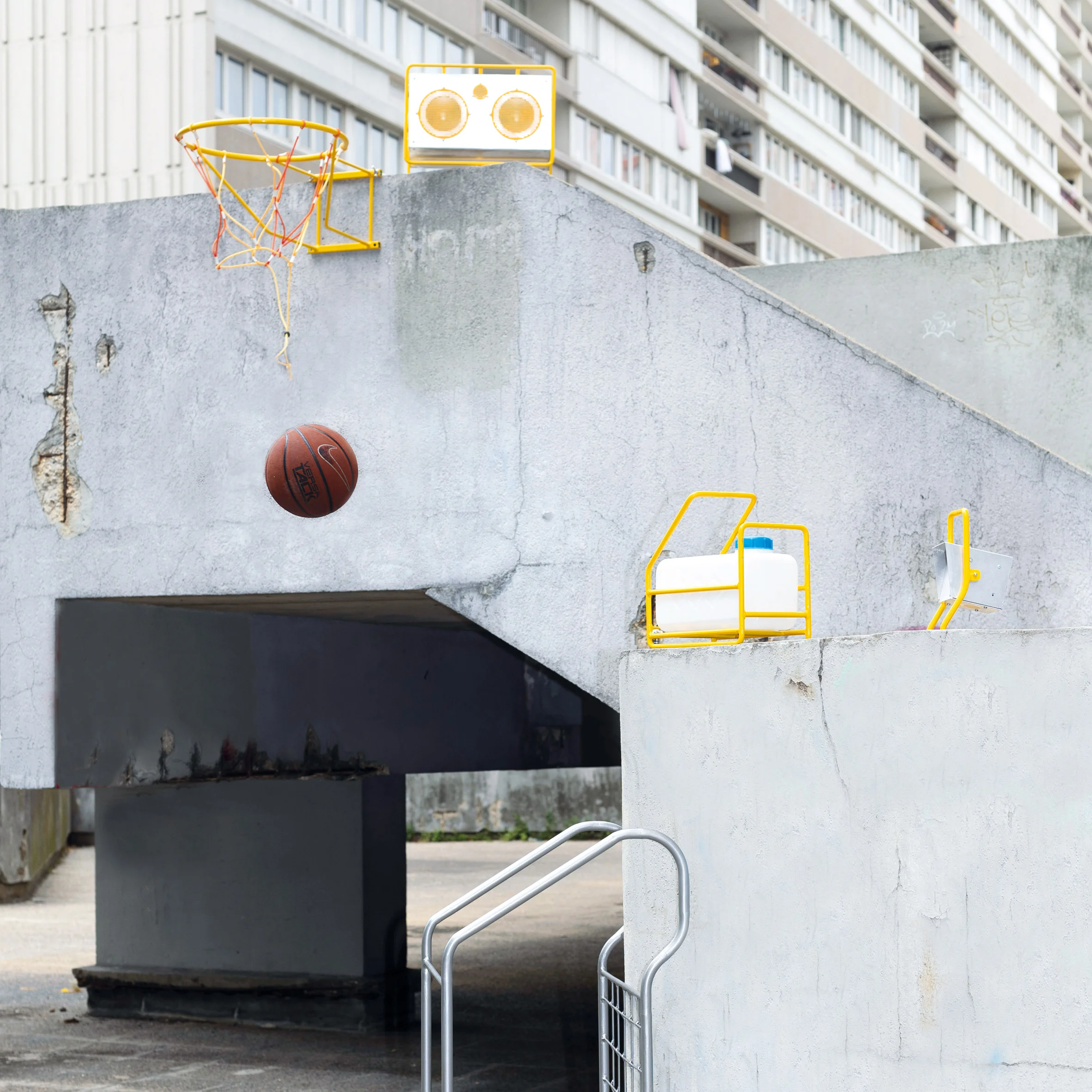
The kit’s design shows how urban play can be easily integrated into diverse environments, filling the gaps where formal courts may be lacking.
Water Square, USA

Water Square, part of New York City's Cloudburst initiative developed by the Grain Collective, pushes the boundaries of conventional basketball courts by blending recreation with flood management. This innovative space features a drainage system that addresses flood risks while providing a community space for recreational activities, underscoring the increasingly pressing intersection of urban planning and climate resilience. Such facilities illustrate how sports venues can contribute to broader environmental strategies, shifting the narrative around their roles from simple play areas to vital community assets. This blends recreation with sustainability, showcasing how thoughtful design can serve dual purposes, making a case for more facilities to tackle urgent environmental challenges.
Implications and Future Outlook
The examples of innovative basketball courts discussed highlight a larger trend in urban design—one that prioritizes community engagement, environmental responsibility, and cultural sensitivity. These spaces are more than mere athletic venues; they reflect a societal shift towards integrating recreational facilities into the fabric of community life. If you're working in this space, this could signify a fundamental rethinking of how public spaces can serve multiple functions. The significance of these projects extends beyond their immediate physical spaces; they could challenge developers and local governments to invest in more inclusive and responsible designs as communities grapple with their changing needs.
As we look ahead, the importance of designing accessible, multifunctional spaces will likely only grow. Urban areas are continually evolving, and recreation facilities might soon become critical components in addressing various social and environmental issues, from climate change to public health. The pressing need for resilient infrastructure means that basketball courts, once considered purely for play, might emerge as linchpins in the urban planning paradigm. The future of community sports facilities is poised to intertwine with broader urban agendas, reinforcing the case for smarter, more sustainable designs.
Discussion
Sign in to join the discussion.