Marset’s lighting range pairs a 1973 steel reissue with sculptural table, ceiling and outdoor designs by Mathias Hahn, Joan Gaspar and Jaume Ramírez.
Marset’s latest lighting selection moves between archival design and new material statements, with products for tables, ceilings, walls and outdoor spaces. It includes a revival of a 1973 collection alongside designs by Mathias Hahn, Joan Gaspar and Jaume Ramírez. Taken together, the pieces show a company working across distinct styles while keeping lighting’s physical presence in the room firmly in view.
A new lamp built around a familiar silhouette
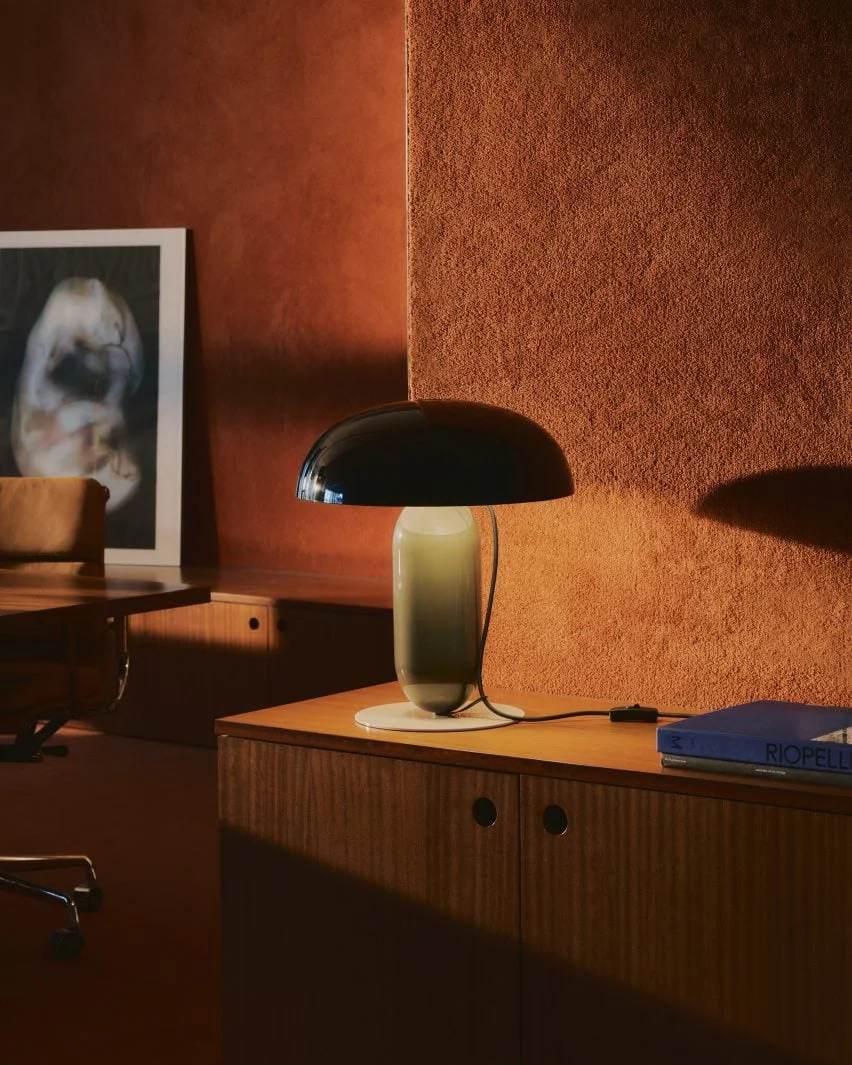
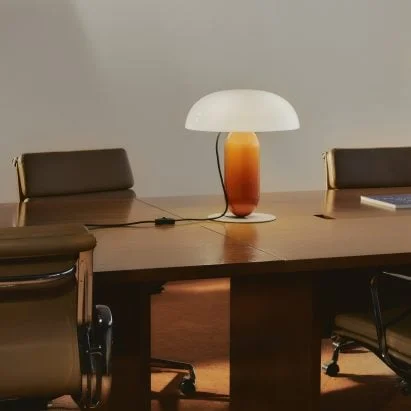
Hahn’s Gambosa table lamp treats the familiar shade, stem and base as a single glossy form, combining steel with opal polycarbonate. Its rounded body appears to balance on its base, while the cable runs down one side as a visible design detail. That choice makes a normally incidental part of a lamp’s construction contribute to its appearance; the result asks to be seen from more than one angle.
Orange, moss grey, black, pale pink and opal finishes give the lamp a palette that nods to mid-century interiors. The reference is clear, though the continuous body gives the design a more unified character than a conventional shade-and-stem arrangement. This is more significant than it looks: the lamp’s identity comes less from ornament than from how its component parts have been compressed into one silhouette.
Revisiting a technically demanding design
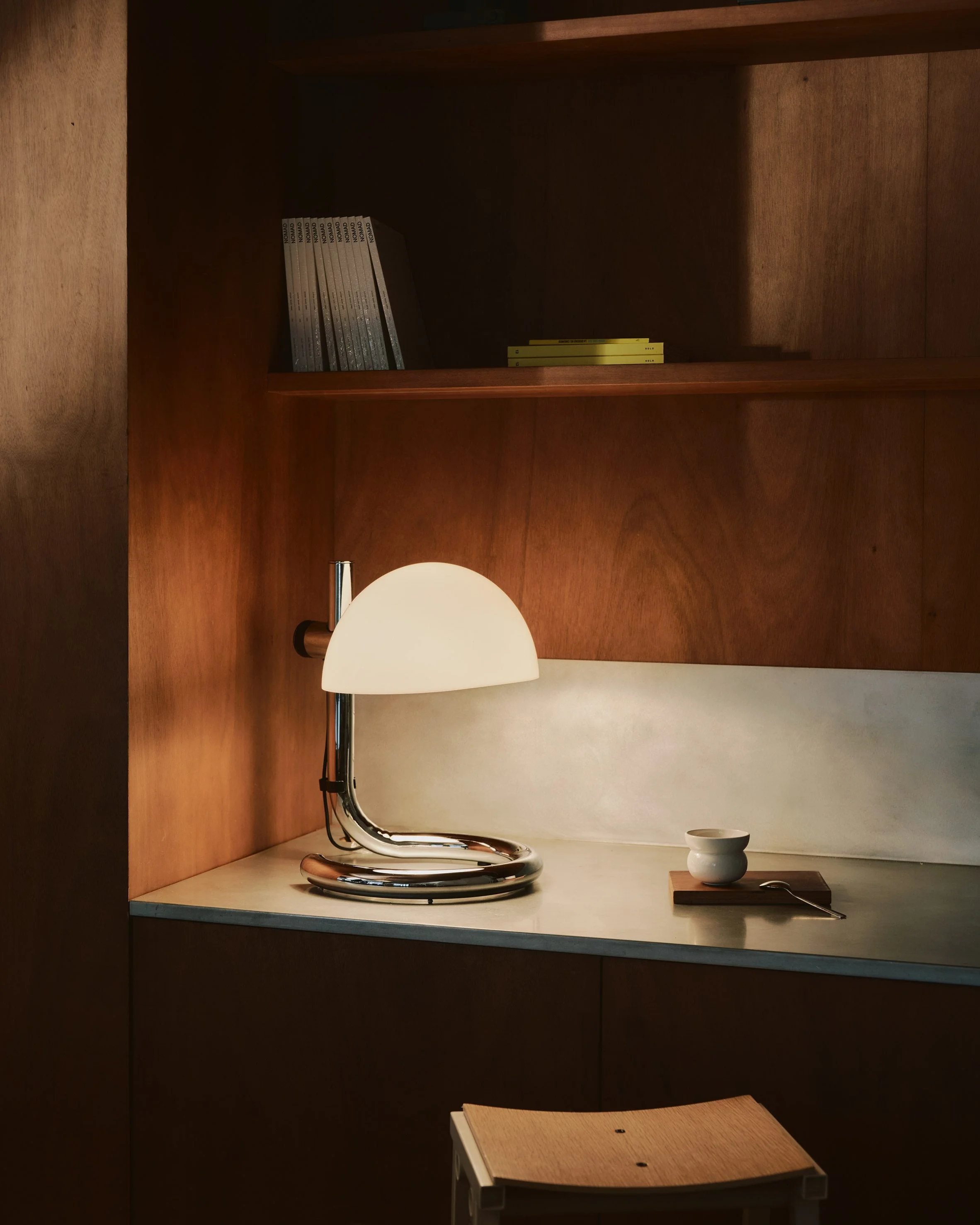
The Lauro collection brings a 1973 Marset design by P Aragay and J Pérez Mateo back into production. Bent steel tubes define its substantial profile, with table, floor and wall versions allowing the same visual language to carry through different parts of an interior. The collection also carries a trace of its original manufacturing context: Marset describes bending steel as a significant technical challenge when the design was created.
That background gives the reissue a point beyond nostalgia. A revival can show how a design idea holds up when its material and production demands are made visible, rather than presenting the past as a ready-made style. Here, the curved steel structure is both the source of the collection’s character and a record of the work needed to make it. A useful reminder that production methods shape what design can become.
Material and form shape the newer designs
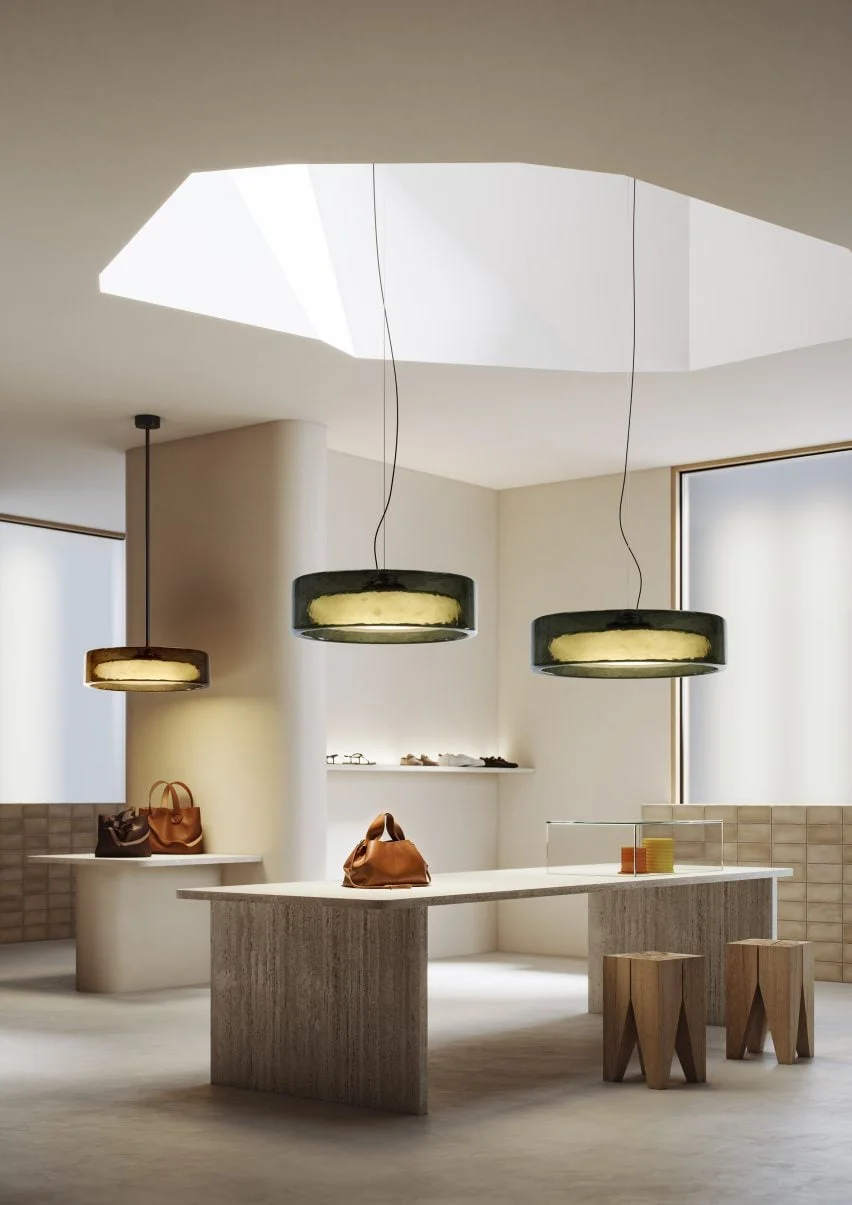
Joan Gaspar’s Ringo uses transparent, rotomoulded polycarbonate to create a dimpled surface reminiscent of melting ice. The cylindrical light is offered as a pendant or a flush-mounted fitting, and its clear material gives the simple shape its visual character. The surface provides the main detail, while the transparent body keeps the overall form legible.
That balance matters in a fitting expected to sit within a larger room scheme: a strong texture can attract attention without relying on a complicated outline. Ringo’s ice-like appearance is an analogy, rather than a claim about the material itself. The distinction is useful. It lets the design suggest a familiar natural form while remaining grounded in an industrial material and process.
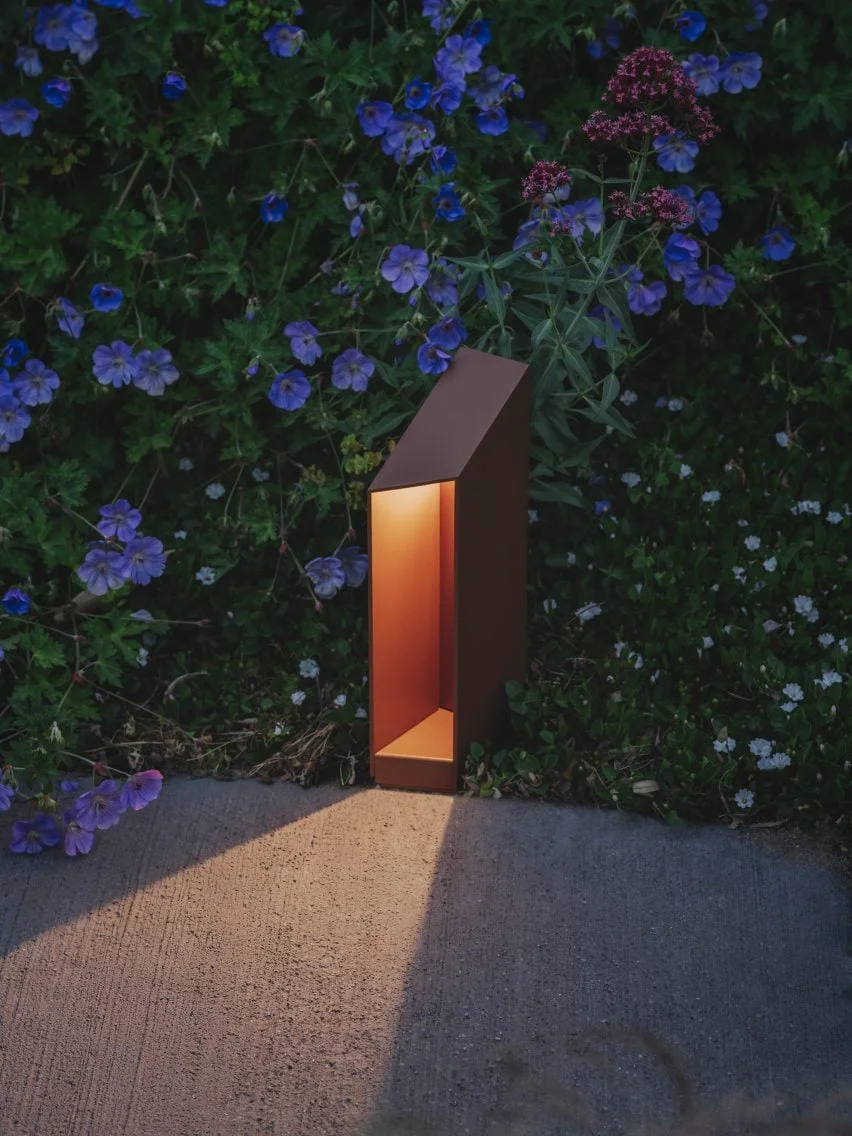
Gaspar’s Domus takes the collection outdoors as an angular bollard light. Its outline suggests a house glowing after dark, turning a functional ground-level fitting into a recognisable shape. Three available heights let the lights stand alone or be grouped to create a more sculptural arrangement and an impression of several lit windows.
Grouping gives the design a different role from a single bollard: repeated forms can read as a small composition, while an individual unit makes a more restrained mark. If you’re working in this space, that flexibility is a practical consideration as well as a visual one. And yet the house-like outline is doing much of the storytelling; the appeal will depend on whether that image suits the setting.
Glass, light and a more decorative profile
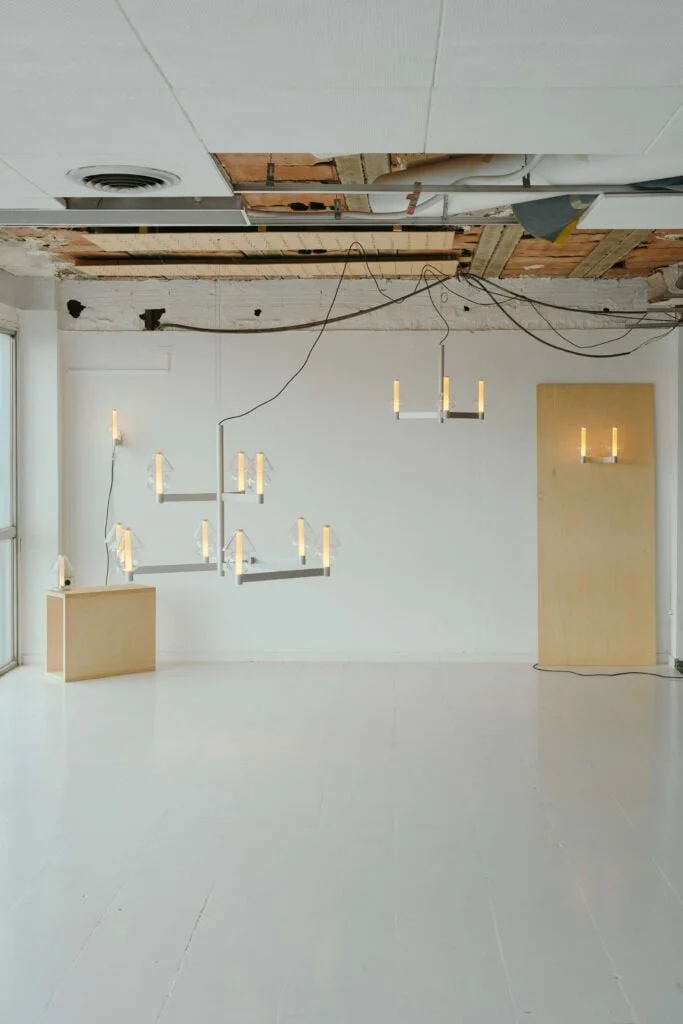
Jaume Ramírez’s Fragile collection combines geometric glass shades, metal details and illuminated bar-shaped elements. Spherical and conical volumes give the pendant, wall and table lights a playful profile. The contrast between solid-looking glass forms and the glowing bars breaks the fixture into distinct parts, making the construction itself part of its visual effect.
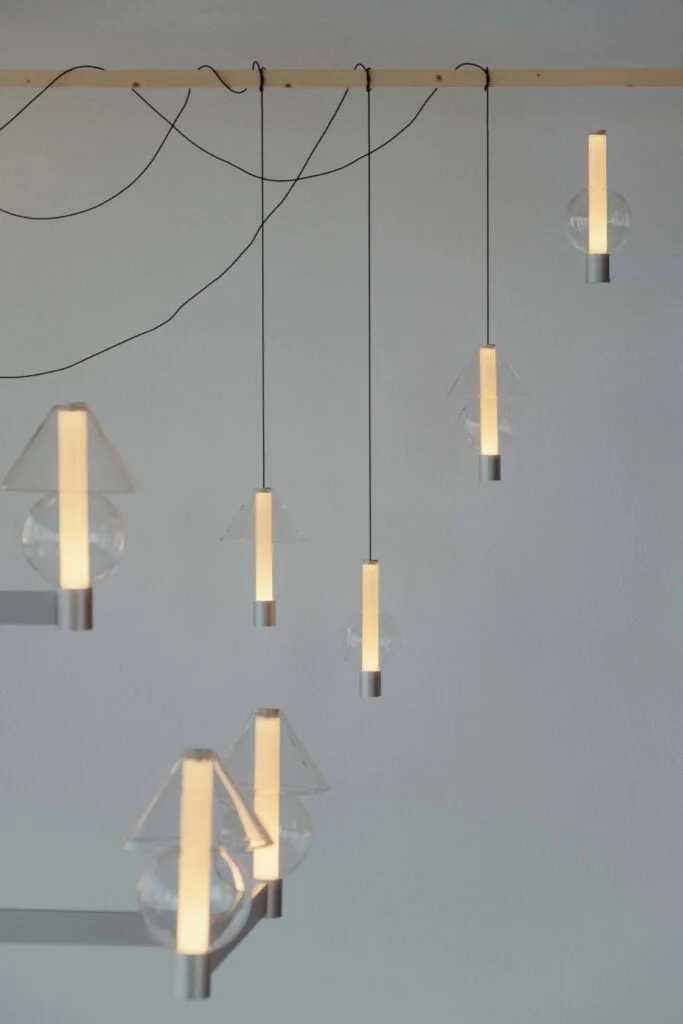
The range across table, wall and pendant formats gives the same arrangement of materials several uses. That can help a collection feel coherent across a room, although the decorative shapes will have a stronger presence than a purely discreet light source. Here's the thing: the name “Fragile” points toward the glass, but the design’s character depends on the relationship between that material and the light elements surrounding it (and this is the part most people overlook).
What the selection says about Marset
Marset’s history reaches back to the 1940s, when Francisco “Paco” Marset established a small metal foundry in Barcelona. His grandchildren Javier and Carlos took over in the 1990s and reshaped the company as a design brand, building an ongoing relationship with collaborators including Gaspar. The current selection reflects that mix of industrial heritage and contemporary work across several lighting categories.
The range makes that history visible in different ways. Lauro recalls a design shaped by the technical limits and possibilities of steelwork; the newer pieces use material, surface and silhouette to make their own identity. The common thread is not one house style, but an interest in how a fitting occupies space and how its construction can be read. That gives the collection breadth, though breadth alone doesn’t establish which designs will endure.
For readers following the company’s direction, the reissue and new work offer a useful measure of its priorities: archival continuity sits alongside collaborations that test distinct forms. The next question is how these objects perform in actual interiors and outdoor settings, where scale, light distribution and surrounding materials matter as much as the product image. The selection suggests a deliberate range of visual approaches. Its lasting value will depend on how well those approaches serve the places they’re designed for.
Discussion
Sign in to join the discussion.