Ten states are challenging new escrow payment regulations that could eliminate interest for homeowners, threatening consumer protections.

Last Tuesday, a coalition of ten states took action against the Office of the Comptroller of the Currency (OCC), filing a lawsuit that seeks to block newly implemented rules regarding escrow payments. The group, led by Oregon, argues that the two new provisions unfairly allow banks to bypass existing state laws that mandate interest payments on mortgage escrow accounts.
By contesting these regulations, the states aim to maintain consumer rights, ensuring that residents receive fair compensation for the funds held by financial institutions in escrow accounts. This is vital for homeowners who often rely on these interest payments.
Dissecting the Lawsuit
When purchasing a home via a mortgage, borrowers typically make monthly payments that cover not only the loan principal and interest but also contributions to an escrow account. This account is essential for handling costs like homeowners insurance premiums and property taxes, as well as mortgage insurance if necessary.
Statistics show that roughly 80% of mortgage holders maintain an escrow account, according to Lereta, a real estate service provider. Currently, there are 14 states and U.S. territories that have laws enforcing interest payments on these escrow balances. The lawsuit, filed on August 11, 2026, challenges the OCC’s new rules, which the states argue threaten the integrity of local consumer protections.
The complaint specifically targets two controversial rules: the Escrow Powers Rule and the Preemption Rule. These regulations are perceived as a coordinated effort to eliminate state jurisdictions over interest-on-escrow laws that apply to national banks and federal savings associations.
In part, the lawsuit contends, “When Congress revised federal laws overseeing escrow accounts nearly two decades ago, it underscored that national banks must pay interest in accordance with pertinent state or federal laws.” The complaint describes the OCC's actions as “arbitrary and capricious,” citing a lack of evidence supporting claims of market disruption or operational challenges stemming from existing state regulations.
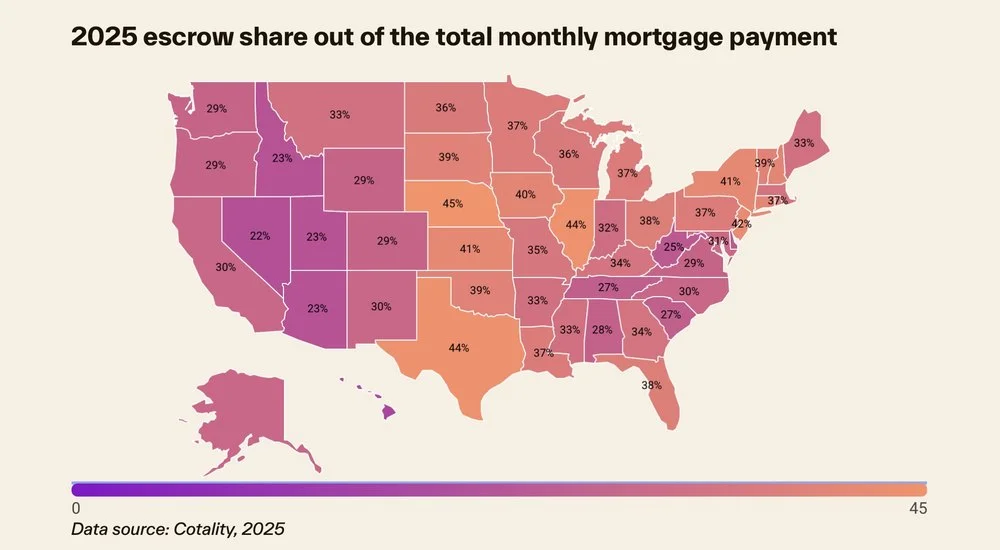
Potential Loss of Interest for Homeowners
If you earn interest on your escrow account, it might be a small amount that often goes unnoticed. Cody Schuiteboer, president and CEO of Best Interest Financial, mentions that “borrowers typically overlook the interest accrued on escrow until they encounter a minuscule line item in their yearly escrow analysis.” This line item often pales in comparison to the more substantial expenses like taxes and insurance detailed in their statement.
Interest rates on escrow differ significantly among the states involved in the lawsuit, leading to variability in potential losses for homeowners. For instance, both Rhode Island and Connecticut require interest to be paid at rates aligned with standard savings account rates, which as of 2026 are significantly below 1%.
On the other end of the spectrum, Massachusetts grants lenders discretion over the interest rate offered. Maryland potentially offers the most favorable rates among the plaintiff states, with its lenders obligated to pay interest according to the yield on one-year U.S. Treasuries, which is currently around 3.99%.
Escrow accounts often contain substantial sums, as property taxes and insurance are typically paid just once or twice a year. This can lead to significant discrepancies in the amounts homeowners might lose based on their state’s regulations. For instance, if a Maryland homeowner holds $10,000 in escrow at an interest rate of 4%, they could earn around $400 annually. In contrast, a homeowner in Rhode Island or Connecticut at the current average savings rate of 0.63% might only earn $63 yearly.
This disparity translates to annual interest earnings that could range from $3 to $100 depending on the escrow balance, which, while seemingly minimal, represents a tangible financial impact. However, Schuiteboer points out that this doesn’t significantly alter homeowner behavior.
Counterarguments and Industry Perspectives
Interestingly, prior to the OCC's enactment of its new rules, The Bank Policy Institute, an independent public policy group, published findings arguing that when lenders must pay interest on escrow accounts, they often offset these costs by raising upfront origination fees. Their stance suggests that a lack of interest regulations enables banks to manage escrow administrative expenses more effectively, potentially benefiting borrowers over time.
Schuiteboer remains skeptical of this viewpoint. “I’d need to see the data to be convinced,” he remarks. He emphasizes that escrow interest represents a minimal cost to banks compared to origination fees and implies that the removal of interest payments could lead banks to boost fees rather than pass any savings along to customers. “The dynamics favor the banks, not the consumers,” he concludes, urging caution about claims made without substantive evidence to back them.
Discussion
Sign in to join the discussion.